 Skip to content
BLOG
First Steps to Organizing Your Money
A short segment with Ani Miller on how to start putting your finances in order.
June 24, 2025 · Interviews · Leer en español
Organizing your money does not start with a perfect spreadsheet: it starts with a first step. In this five-minute segment, Ani Miller shares how to start putting your finances in order.
The full conversation
If you have just arrived in the United States, one of the first things you need to learn is how to organize your money: from opening a bank account to avoiding financial traps and understanding how credit works. That was the topic of a new edition of “Ya llegué, ¿y ahora qué?” (“I'm here, now what?”), the El News Café segment dedicated to newcomers, in which host Javier spoke with financial advisor Ani Miller about the first steps to getting off on the right foot.
What you need to open a bank account
Javier started with the most basic question: what does it take to open a bank account? Ani explained that, upon arriving in the country, a person can open one with their passport and by showing an address in the United States.
Even if you don't have papers, it doesn't matter: with the passport from your country you can open that account.
What about an ITIN or a Social Security number? At first they are not required, although Ani warned that banks are asking for them more and more these days. It is also in the person's interest to have one, because an ITIN, or a Social Security number if they are already eligible, allows them to start building their credit history in the United States.
How much money you need
You also do not need much money to get started. According to Ani, some banks let you open an account with as little as $10; the task is figuring out which ones. She also recommended looking at credit cooperatives, or credit unions, which tend to offer more flexibility and, as Javier pointed out, generally better interest rates.
Your credit score: what it is and how to build it
Javier wanted to know whether your credit score matters when opening an account and what those numbers everyone talks about mean. Ani clarified that credit scores range from 300 to 850 and that a score is not a requirement for opening a bank account, but that you will need one as soon as you start applying for credit cards, loans and other products.
As for the first card, she explained that when a person starts with no history, the approval is really a vote of confidence from the bank. From there, the score goes up with consistency. These were her recommendations:
- Be very consistent about paying your credit cards.
- If the card charges interest, try to pay off the balance before 30 days so you don't pay it.
- Don't let debt pile up.
- Keep a low balance, ideally 30% or less of your limit.
The traps to avoid
Next, Javier asked about the most common traps for newcomers. Ani's first answer was emphatic.
Definitely, don't take cash advances.
She explained that withdrawing money from an ATM with a credit card usually carries very high interest, around 30%, and that this makes it easy to drown financially. The second trap is buying everything on credit just because you have the card, without knowing whether you will later be able to pay for everything you bought.
A budget, from day one
There is a lot of talk about making a budget, and Ani explained where to begin:
- Know what income you have.
- Identify your fixed expenses.
- Start saving from day one, even if it is just a little of what comes in.
Where to learn about finances for free
Javier acknowledged that when you arrive somewhere new you do not know what to do, and asked whether there are organizations that help people get financially educated. Ani said there are, and that many of them do it free of charge. Some of them were shown on screen:
- Hispanic Unity
- Step Up
- CareerSource
A plan for each person
To close, Javier noted that all of us at some point arrived in this country and felt a little lost. Ani agreed and explained how her company works with newcomers: they sit down with each person and create a tailored plan based on the experience that person brings.
We're all good at something.
The segment ended with thanks for educating the audience on those first steps that are so needed upon arrival. The central idea was clear: opening an account is simpler than it seems, credit is built with consistency and discipline, and a budget with savings from day one is the best foundation for starting a new life in the United States.
This article is an English translation of the original Spanish version. Quotes have been translated from Spanish. Leer en español.
BOOK A VISIT
Let’s talk about your money
Leave your details and we will call you to understand your situation. We speak English and Spanish.
KEEP READING
More from the blog

“Trust Doesn't Mean You Stop Asking”: Ani Miller on La Mesa Caliente
On La Mesa Caliente, Ani Miller explains why handing all your finances to your partner can leave you vulnerable.
Read →
Ani Miller Services Turns 10: Univision KUKC’s Coverage
Univision KUKC was at the 10th anniversary celebration of Ani Miller Services with friends, family and clients.
Read →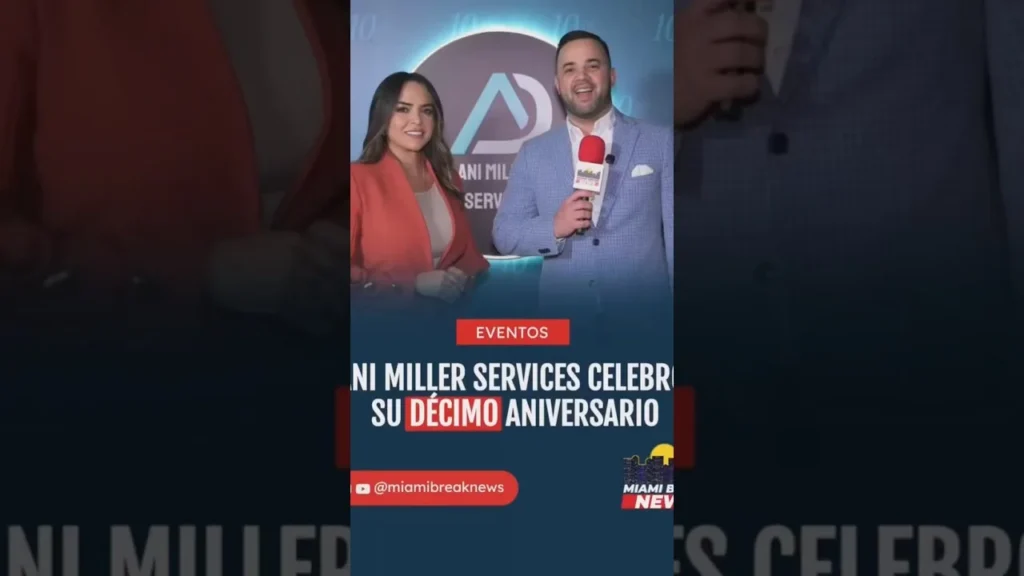
“Focused Discipline”: Ani Miller Services Celebrates 10 Years
Ani Miller celebrated her company's 10 years and her 39th birthday in Miami, and shared the key to her journey.
Read →YOUR NEXT STEP
Before you make an important decision about your money, talk to Ani.
A financial intelligence firm for individuals, families and business owners. In English and Spanish.
Notary Public. I AM NOT AN ATTORNEY LICENSED TO PRACTICE LAW IN THE STATE OF FLORIDA, AND I MAY NOT GIVE LEGAL ADVICE ABOUT IMMIGRATION OR ANY OTHER LEGAL MATTER OR ACCEPT FEES FOR LEGAL ADVICE.
© 2026 Ani Miller Services · Inversiones Los Palapunes Corp.
Ani Miller Services