 Skip to content
BLOG
The American Dream Is Possible: Ani Miller on Habla Bien Conecta Mejor
From bank vice president at 28 in Venezuela to founder of Ani Miller Services in the United States.
April 13, 2025 · Interviews · Leer en español
At 28, Ani Miller was already a vice president at one of the most important banks in Venezuela. In 2016 she started from scratch in the United States and created Ani Miller Services to help the Latino community organize their finances, get established, start businesses and take advantage of the opportunities this country offers.
What we talk about
- How to go from executive to entrepreneur.
- How to balance the roles of mother, professional and businesswoman.
- Why limits exist mostly in the mind, and how to break them.
The full conversation
In episode 38 of Habla Bien, Conecta Mejor, the podcast of communicator Daniela Kosan, Ani Miller told her full story: from the little girl who asked a neighbor what she did for a living, through a banking career that began in her teens, to her arrival in the United States and the birth of Ani Miller Services. Daniela introduced her as a woman who, according to her introduction, became vice president of business at one of the most important banks in Venezuela at just 28, with a bachelor’s degree in public accounting and a master’s degree in finance. Over the course of the conversation they talked about leadership, how to close a deal, the people who throw you off focus, the scare of an IRS letter that changed her life and how she convinced her husband to buy their first home in the middle of the pandemic. Here is the full interview, told in order.
One word to describe her: passionate
Daniela opened with a list of words so Ani could choose the one that describes her best: confident, empowered, visionary, inspiring, motivating or passionate. The answer was immediate.
Passionate. Definitely passionate.
Daniela confessed that she had sensed it: to become a leader at a bank so young, you need a lot of drive and a lot of passion.
From the INCE program to banking at 16
Ani shared that she started school very young and finished high school earlier than usual. She then entered a program run by INCE, a Venezuelan institution that prepares recent graduates for the professional world. She was trained as an accounting assistant, and the company sponsoring her was a bank. There she did one year of theory and then her year of hands-on practice.
Because of her strong performance, the bank decided to hire her as an employee, and that is how, at 16 or 17, her professional story began. Daniela could not get over it: she thought about her own son, who was about to turn 15, and could not imagine him working at a bank two years later.
The neighbor who worked at a bank
Ani explained that her interest went back much further. Her father, in Venezuela, always had rental properties; that has been his business his whole life. Her mother is an administrator, and Ani always saw her doing the math. And there was a neighbor who worked at a bank: she left every day well dressed, got around on public transportation and one day came home with a new car.
Ani, still a child, approached her very politely and asked what she did for work. The neighbor told her she worked at a bank, that she had started very young and had worked her way up. Two years later that same neighbor bought her own house and moved. Ani thought that was the path she wanted. Besides, she always liked finance: she started working at 11, and from the time she was a little girl she told her mother she wanted to have her own business.
From that banking period she keeps a special memory: banking as it was about 20 years ago, when there was still face-to-face service from one human being to another, when you sat down with someone who helped you with a smile. There she met people who supported her and believed in her.
A manager at 20: “Give me 90 days”
It was not easy. The first time Ani was a manager she was 20, and the people working for her were 50. Daniela wanted to know what her inner dialogue was so she would not feel inferior in front of people with much more experience. Ani shared the speech she gave every time she took over a new group.
You can’t say no to something you don’t know. You don’t know me and you have no reason to believe in me, because words are carried away by the wind. We have to live by facts and realities, even if we are dreamers.
Her proposal was concrete: “Give me 90 days.” If, after that time, the team felt she was not the leader they wanted, or that the direction she was taking was not right for the business, she would leave herself. Daniela, laughing, asked her to “adopt” her, amazed that a 20-year-old would speak that way in front of a team of executives.
“I don’t want to live a limited life”
Where did that strength come from? Ani answered that since she was very little she loved to read, and that she always saw life differently. Adults tend to think you have to grow up before you start worrying about the future; she decided at a very young age that she did not want to worry about looking at the check in a restaurant or telling her children there would be no vacation that year.
I want to ask my children where they want to go. I don’t want to live a limited life. And if you don’t want to live a limited life, you have to focus and make the sacrifices that are yours to make when it’s time to make them, because that will be temporary.
Daniela added that society pushes us to “enjoy ourselves while we’re young and figure it out later,” and that “later” comes with less energy. Ani agreed: in the United States a great many people have to keep working until very advanced ages because they have no other way to support themselves. She shared that she received a lot of criticism for her way of thinking; her friends told her she was boring because she was always working, and she answered that, thanks to that, she could go wherever she wanted without keeping track of how much she was spending. Her conclusion is that we all have a talent, but first you have to find it. In her case, that talent was finance.
What happened after the 90 days
Daniela wanted to know how that test turned out. Ani explained that the team had never met its targets. At banks, the annual budget is divided among the branches and turned into monthly goals, and that group worked just to put in their hours: nobody reached the goals and nobody earned commissions.
A person won’t miss something they don’t know. If you’ve never had commission money in your pocket, how are you going to miss it?
To help them understand, she used an everyday example: she told them she does not like cooking at night to bring food to work, but prefers to take her lunch hour and go eat something tasty and hot at a restaurant. And if she likes that, she has to focus on meeting her goals. At the office they had to perform and be efficient, because she was used to making money and everyone on her team had to make it too. The 90 days were meant to prove that, by working in sync and supporting one another, they would all meet their targets and all get paid.
And that is what happened: that first quarter, the entire team earned commissions. She recalled that one of the employees came up to her to say he had gone on a trip with his family that weekend, and he described “that feeling that I could provide” as incredible. Ani told him he could do it every weekend if he stayed focused.
A career in business, never at the teller window
With a team that hit its goals month after month, Ani kept climbing. She held almost every position imaginable except teller: she was never a cashier, she was always on the business side. She credits her first boss at the bank, whom she considers one of her mentors and with whom she is still friends, for always pushing her to focus on business, because that was where she could grow.
I took that opportunity to keep growing and to bring my team along to grow with me, hand in hand. Not just you, but lifting others up too.
What throws us off focus: people who aren’t on your wavelength
Daniela noted that her podcast is precisely about taking care of our thoughts and the way we talk to ourselves, because that generates emotions and results. She asked Ani whether she had discovered what pulls people away from their goals.
Ani answered that many people let themselves be swayed by what the people around them say, by “toxic” people, as they say nowadays. It is not necessarily about bad people, but about people who are not on your wavelength and do not want to reach the same goals, and who, when you tell them you are going to start a business, say “don’t do it, leave it alone.” From what she has seen, those messages often come from people who are afraid you will succeed, and they can come from friends, your partner and even your family.
She illustrated it with her own experience in Venezuela, where she bought and sold cars. She clarified that the economy there worked completely differently and that you cannot apply that logic to the United States: in that context, she would buy a car and three months later it was worth twice as much. Even so, relatives would ask her why she kept buying when she already had four.
When someone close to you, a friend, a relative or your partner tells you not to do it, it plants a little seed in you and you start thinking that maybe you won’t be enough. That’s why you have to focus on what you really want to achieve and surround yourself with people like you.
The beauty of business banking
Daniela asked whether, as she climbed, she felt she was reaching a ceiling. Ani answered by talking about her love for banking. When you are on the business side, she explained, you accompany a person or a company as it grows, “like a baby.” She visited very small businesses that, thanks to a bank loan, grew and then opened another location. The credit belongs to the owner, but you feel you contributed your grain of sand.
She added that banking also lets you grow financially, as long as you stay focused: bank salaries are average, and what really makes the difference are the commissions, which only come if you meet your goals all year long.
How to teach closing: the manager with 25 visits
Daniela wanted to learn about her working method. Ani explained that, in addition to monthly meetings with managers, every week she visited all the branches under her responsibility across Caracas, “in heels every single day,” and called her managers daily to ask how many visits they had made and what was going on.
She told the story of a manager who was very good at making visits: they were supposed to make five a day, he completed 25 a week, but he did not close anything. Ani, whom they called “the closer” at the bank, offered to go with him one day just to observe, and the next day to do the closing herself so he could see where he was going wrong.
She spotted the problem right away: he went straight to offering the loan, very head-on, almost teaching the owner how to run his business, and the client felt a clash. She, on the other hand, started by connecting. If she saw a painting in the office, she asked about its story, and the owner would end up telling how he had gotten to where he was. That broke the ice.
Then came the twist that changed the conversation for the client. Ani explained that at her level they already had signing authority on the loan committee and that the loans they approved were based on what they saw on those visits, because it was the money of the people who trusted the bank.
I don’t need to give you the loan. You’re the one who needs the loan. The bank needs to know your story, where we’re headed and what your growth projection is.
With that shift in perspective, she said, clients who had gone three visits without deciding ended up asking for the paperwork to be sent over. “Every bank is going to come and sell to you,” she explained to the manager; the difference is making the client feel that he is the one who has to convince the bank.
Putting each person where they shine
When her managers started earning commissions and felt what they could provide for their families, they became unstoppable. There came a point, in her last two years in banking, when the bank wanted to fire someone, they sent that person to her first.
You can’t make a fish climb a tree trunk. You have to see what the person is good at and put them in that area.
She shared that more than once she was told it could not be: they had given her 60 days to fire someone and now that person was number one in their area. Daniela described it as a gift: the intuition to see each person’s talent and put them in the right place. The host also shared that she feels awkward talking about money when negotiating, and that for years she had a representative who closed deals for her; both agreed that communication is a powerful tool for selling.
The decision to leave Venezuela
Daniela asked what motivated her to leave Venezuela. Ani explained that it was for a personal reason: the father of her older children died in Venezuela and, after going through a kidnapping experience, she found herself needing to leave the country. In 2016 she arrived in the United States with her two children and her sister, and soon after she brought her mother.
Going from a leadership position to truly starting from zero, without the language, was huge. But from the very first moment, one idea was clear to her.
I’m the one arriving in the country. I’m the one who has to adapt to the country; I can’t expect the country to adapt to me.
If she wanted to improve her family’s quality of life, she had to go to school and learn English. She studied for two years and today she communicates perfectly in the language. She explained that, although in Latino areas you can live in Spanish, to move forward in a field like finance everything is in English and you have to understand it.
In the meantime, she did what many immigrants do: she worked for every delivery app out there. Her children started school, she finished her two years of English and then she decided to create her company.
Ani Miller Services: a company born from her own problems
Ani Miller Services is based on my experience as an immigrant in the United States. All the services we provide at the office are based on the problems I had as an immigrant.
Daniela remarked that, when she looked at Ani’s profile, she was surprised by how broad her portfolio is: finance, insurance, real estate, mortgages and more. Ani summed it up this way: everything a person needs to live in the United States, in one place and with their information protected. And she clarified that she does not serve only immigrants, because she also has many American clients.
The IRS letter that changed everything
The company started with taxes, and its origin is a story Ani told in detail. She had her taxes done by someone who had been recommended to her, that person made a mistake and Ani received a letter from the IRS. The scare was enormous. She scanned the letter, sent it to the preparer and wrote to her, but two, three days went by without an answer, while the letter said she had 30 days to respond. After five days an assistant replied: they were very busy with tax season and suggested she try to resolve it herself.
For someone who came from years of impeccable service in banking, where the client was always taken care of after the sale, it was inconceivable: she had paid for a service and was only asking a question about it. Even so, she wanted to be flexible and thought maybe the message had not been passed along. She drove an hour to the office, waited three hours outside and was never seen.
That day I decided: if I’m going through this, I imagine it could be happening to so many of us who arrive here, who don’t know the system and go along with a recommendation.
From her car she started looking for tax courses everywhere, which was hard in the middle of the season. She found an institute with a one-week intensive course. It hurt to stop working those days, but she needed to answer the letter, which she could not understand even with a translator. She brought the letter to the course, and there they taught her how to respond to it.
With that week of training, she requested an appointment with the IRS and went in person to explain her return. The problem was that the preparer had made a mistake with her son’s date of birth and Social Security number, and that information did not match, so possible fraud was suspected. Ani brought all her documents and the case was cleared up. She also told them what had happened when she sought help, and they explained that a preparer registered with the IRS must be available to the client when the client needs them regarding the service they provided, something she had not known either.
Her first tax season
At that time Ani was making deliveries, and she started telling the story to her coworkers. They asked her to do their taxes. She warned them that she was just starting out, but they answered that if she had been able to go to the IRS to defend her own return, they trusted her. That same year she prepared taxes for about 30 people, friends and acquaintances. It was her first season.
She shared that something similar happened with her own immigration process: because of a problem with a change of address she missed an important appointment, got scared, took a course to understand her case and managed to resolve it. Today, she said, she is a U.S. citizen. Daniela found the common thread running through her whole story: education and preparation to avoid mistakes, which in the United States cost you time and money.
“It’s not easy, but it’s not impossible either”: the first house
In 2018 Ani met her current husband, who is American and has, in her words, an “everything neat and tidy, everything by the book” mindset. When they got married, she suggested they rent for just one year, because after a year they would buy their house. He asked her whether she thought it was that easy.
It’s not easy, but it’s not impossible either.
Then the pandemic hit. In 2020 they were still renting an apartment, and when Ani reminded him that the year was up, he answered that they were in a pandemic. Ani ran the numbers: their rent had gone up and, if they bought, they would pay less than they were paying in rent, with the very low interest rates of that time.
He still was not convinced, and Ani remembered where she came from: she grew up watching her father rent out properties, and on a recent trip to Venezuela she saw that many tenants were still renting after 30 years. She was not willing to let the same thing happen to her. So, with her mix of passion and determination, she spoke plainly: she had goals in life and did not want an anchor. She told him she had made an appointment with the builder for the next day at 11 in the morning, because nobody wanted to buy and they were offering a lot of incentives, and she gave him 24 hours to decide.
She shared, laughing, that she slept soundly and he did not sleep a wink. The next morning they went to the builder, but he said he wanted to think about it one more day. That day, the house Ani wanted was sold. The following day they went back, and he asked the salesperson for the biggest townhouse they had, with the most bedrooms. That was their first property, and the builder covered their closing costs, gave them the electric garage door and changed the flooring, because there were few buyers. Today, she said, they owe a little over 200,000 dollars and the property is worth more than 600,000, in just five years.
From one townhouse to many properties
Eight months after moving in, Ani told her husband they were moving again. She had never wanted a townhouse, where you hear the noise from the house next door, and now that they were ready, she wanted a house. They bought their second property, this time a single-family home. “From there it’s been history,” she said: they have moved seven or eight times and have bought many properties.
Taxes aren’t just for compliance: they’re for growth
Daniela connected that vision with her past buying and selling cars and with her financial training, and pointed out that this is exactly what Ani offers at her company. Ani shared that the day before, a client had told her he was going to close his company, and she asked him whether he had any idea of the potential a company has in the United States.
Here you don’t do your taxes just to comply with the government. You do them because it’s our responsibility, but taxes lift you toward things you can achieve.
That is why she says she loves tax season: every year it brings her closer to new goals. She reaches one and sets another. In her view, the U.S. system is very good for those who understand it and learn to benefit from it legally, “following the rulebook of what the law says.” That way you can grow financially quickly, as long as you stay focused and, above all, believe in yourself.
A message for those who are just arriving
To close, Daniela highlighted Ani’s empathy in helping others transform their lives, not only by telling them it can be done, but that they can go for more. She turned the camera over to her so she could speak to Hispanics who have just arrived, who do not believe in themselves and do not know where to aim.
Believe in yourselves. We all have a talent; what we have to do is focus, discover it, make the most of it and support one another as a community. When we support each other and grow together, we are more powerful.
She added that the Latino community in the United States is extremely powerful if it learns to support itself, and that for anything they need, they should look for people who are on their same wavelength. Daniela closed by asking for a big round of applause for her guest. Ani’s story leaves a lesson that runs through the whole conversation: with focus, preparation and the right people around you, starting from zero is not the end of a career, but the beginning of another one.
Video: Habla Bien Conecta Mejor, episode 38.
This article is an English translation of the original Spanish version. Quotes have been translated from Spanish. Leer en español.
BOOK A VISIT
Let’s talk about your money
Leave your details and we will call you to understand your situation. We speak English and Spanish.
KEEP READING
More from the blog

“Trust Doesn't Mean You Stop Asking”: Ani Miller on La Mesa Caliente
On La Mesa Caliente, Ani Miller explains why handing all your finances to your partner can leave you vulnerable.
Read →
Ani Miller Services Turns 10: Univision KUKC’s Coverage
Univision KUKC was at the 10th anniversary celebration of Ani Miller Services with friends, family and clients.
Read →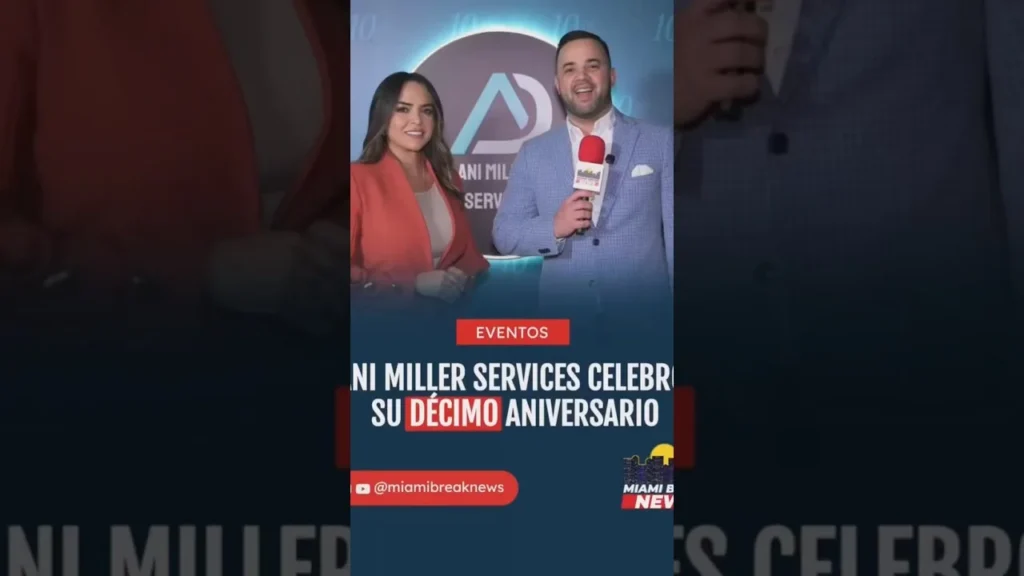
“Focused Discipline”: Ani Miller Services Celebrates 10 Years
Ani Miller celebrated her company's 10 years and her 39th birthday in Miami, and shared the key to her journey.
Read →YOUR NEXT STEP
Before you make an important decision about your money, talk to Ani.
A financial intelligence firm for individuals, families and business owners. In English and Spanish.
Notary Public. I AM NOT AN ATTORNEY LICENSED TO PRACTICE LAW IN THE STATE OF FLORIDA, AND I MAY NOT GIVE LEGAL ADVICE ABOUT IMMIGRATION OR ANY OTHER LEGAL MATTER OR ACCEPT FEES FOR LEGAL ADVICE.
© 2026 Ani Miller Services · Inversiones Los Palapunes Corp.
Ani Miller Services