 Skip to content
BLOG
“You Have to Drop the Drama”: Ani Miller on Elijo ser feliz
Budgeting, language, credit and resilience: on Elijo ser feliz, Ani Miller explains how to become a successful immigrant.
September 18, 2025 · Interviews · Leer en español
On the podcast Elijo ser feliz from Uforia Podcasts, Ani Miller shares how every stumble she went through after arriving in the United States became a service to help other immigrants.
What we talk about
- How to get started: understanding the system and making a budget.
- The language challenge and the jobs that help you get ahead.
- Whom to listen to and whom to trust.
- How each Ani Miller Services offering was born.
- Opening an office in the middle of the pandemic, and the value of credit.
The full conversation
What does it take to succeed in the United States as an immigrant? That question guided this episode of Elijo ser feliz (“I Choose to Be Happy”), the Uforia Podcasts show hosted by Mariale and devoted to that “roller coaster of emotions” that is life. Her guest was Ani Miller, founder of Ani Miller Services, who came from Venezuela and built her own services company starting from a desk in her home. In the conversation, Ani went over her first years in the country, the scams she suffered, the falls that ended up becoming services for her clients and the advice she gives anyone who wants to get ahead in the United States.
A story of falls that became lessons
Before starting the interview, Mariale thanked her audience for sharing the episodes and subscribing, and explained why this story seemed special to her. Each episode, she said, helps her reflect on her own life and understand that, although we all go through low points, it is also up to us to climb back up. In Ani’s case, those falls and those blows probably did not seem helpful at the moment they happened, but they were exactly what she needed to become a successful immigrant. “We can all learn a lot from her,” she said as she introduced her.
Where to start: know where you’re going and make a budget
Mariale opened with the central question: what should you do to succeed in the United States as an immigrant, and where do you start putting everything in order? For Ani, the first step is to identify where we want to go, taking into account what our current reality is.
She explained that many immigrants arrive with a degree, experience or a good résumé, but even so, they first have to set foot in the United States and take care of the basics: where they are going to live and what they are going to do for work. Once that is more or less in place, you know how much income you have and what your expenses are going to be. And that is where the budget comes in.
Set up a basic budget. I always tell all my clients that it’s very important for them to understand that there are things we want and things we need.
That, they both agreed, is the big difference. Ani acknowledged that telling apart what you want from what you need takes discipline, and that human beings in general find it hard to get into these topics because they require sacrifices and giving up things we enjoy. But if we understand that those sacrifices are for a set period of time, until we can get established, then you really can achieve financial success in the United States.
You can dream and want many things, Mariale reflected, but there is a reality, and it is knowing what you really need.
Understand the system and ask people who know
Beyond the budget, you have to understand how the system works. Mariale used taxes as an example: in our countries, in theory, people pay them too, but there is not as much rigidity or the fear that exists in the United States. Here you have to learn to do your taxes and get organized.
Ani was clear in her recommendation: instead of struggling when you arrive in another country, start asking people who know and who have experience, because many times we make mistakes and end up in the hands of people who do not really know how the system works.
The hardest part of arriving: the language
Mariale asked her what was hardest when she arrived in the United States. The answer was immediate: the language. As soon as she figured out what she was going to do for work, she decided she had to start studying English.
Ani shared that she has three children. The youngest, who is about to turn two, was born in the United States; the two older ones, a 17-year-old boy and a girl who is about to turn 15, were born in Venezuela and came with her. Mariale pointed out that, although Ani started over in this country, she did not start “from nothing”: she brought her experience with her. “From experience,” Ani agreed.
The first scam: a company set up wrong
Did she look for someone to advise her and guide her on what she needed to do? Yes. Ani asked people she knew and was referred to some professionals whom, she says, she now thanks for the lesson, harsh as that may sound.
They charged me a fortune and scammed me. The company wasn’t set up properly, and afterward I had to go through a process directly with the IRS myself, and the same with my taxes.
As those things kept happening to her, she realized there was a big weakness there, at least for immigrants in the area where she arrived, Doral, in Miami: misinformation. Since she did not speak the language well, she let herself be guided by people who supposedly knew, and they led her into mistakes.
I’ll be completely honest with you, from my heart: if I hadn’t had the experience I brought from Venezuela, they most likely would have knocked me down financially. Maybe I wouldn’t have been able to get back up.
How to know whom to trust
Mariale shared that something similar happened to her with a lawyer recommended by someone she trusted, who turned out to be a disaster in the middle of her immigration process, and she described the anguish you feel when your ability to stay in the country and the money you need for other things are on the line. So how do you know whom to turn to?
Ani answered from her own experience. Today, with the track record her company has, the situation is different, but the rule she learned along the way is still the same: she does not hire any company or any vendor unless she is certain they have already been down that road.
How can a person who is in bad shape financially be knowledgeable about finance? First they have to get their own life in order so they can be an example, and then they can guide other people.
Be careful with advice from friends
Your environment, Ani insisted, is very important. That is why she tells her clients not to listen to their friends without first asking themselves what that friend is up to. When she hears stories of people who stopped pursuing a business because “my friend told me to,” her conclusion is usually that the friend, knowingly or not, was holding back their growth.
If your friend is someone who is starting businesses, who is doing deals, who surrounds himself with positive people like himself, he will most likely tell you: of course, you can do it. What do you need from me? I’m here.
People who are not living what you are living, she explained, are not going to push you to start a business or get ahead; by contrast, people who are successful want everyone to do well. Mariale recalled Alejandro Chabán, a guest on a previous episode, who shared that he listened to friends who advised him to declare bankruptcy, did it, and that it was the worst thing he could have done. Hence the importance of paying close attention to whom we listen to.
The United States isn’t the way they paint it
Mariale offered a warning for people in other countries who are thinking about emigrating, without getting into politics or the news: many arrive believing that nothing bad happens in the United States, that there are no mistakes and that you can trust everyone, as if the kind of street-smart trickery we know in Latin America did not exist here. And it turns out that is not the case: here, too, you can run into people like that.
What did Ani do to recover from that scam? She learned to be careful before trusting, and above all she turned the fall into a reason to get trained.
All those falls made me say: you know what? What I have to do is get trained. I bring experience from Venezuela, but the American system is completely different.
Ani has solid experience in banking and finance, but she acknowledges that things work differently here. In the United States, she explained, your credit score really does matter, and if you take care of it, it can be your best ally. As an example, she shared that she has clients who came to her office with a mistake on their taxes and who today have three and four rental properties and live off that passive income.
There is a way. What you have to do is get some structure, look for people who have already traveled that road, who have already been there, who have already fallen.
Mariale added that many people do not understand credit when they arrive, because in Latin America it is common to pay in cash. Here, on the other hand, you have to take care of it, and even if you make mistakes and damage it, by learning from them you can achieve success later on.
The car that taught her to negotiate
Mariale wanted to know why Ani decided to include so many services in her company, not just taxes and accounting. The answer has to do with her own story.
It’s a funny thing, because every service Ani Miller Services provides comes from the falls I had as an immigrant.
The first was buying a vehicle. She trusted a friend, went to a dealership without speaking English and believed everything she was told. She put 1,000 dollars down and made payments on the car for two years. Then a police officer crashed into her and, when she went to the dealership to ask for help trading in the car, they told her she still owed practically the entire car. They explained that she had signed a direct financing contract with the dealership, for 71 payments, in which she was mostly paying interest and the value of the car was left for the final payment.
She left there very sad, especially because of her friend, someone she truly trusted. But she did not stop there.
I had my two minutes of depression and then I told myself: you know what? I’m going to learn how the car-buying system works in the United States.
That was the first service she began offering, even before taxes or accounting: advising people on buying their car. Her method is simple, and she still uses it:
- First she talks with the client to find out what car they want and how much money they have.
- She negotiates the deal before going to the dealership, so the client does not spend all day there, exhausted and hungry, and end up signing anything just to leave.
- Only if the numbers are right and they agree do they go to the dealership together, sign in about 40 minutes and leave.
The IRS letter that changed everything
At that time Ani was working from home, at a broken desk. The next blow came with taxes. She paid someone to prepare her return and then received a letter from the IRS. Today, with all her experience, she confesses that when an IRS letter arrives her hands still shake a little; back then, much more so.
She called the person who had done her taxes, and three, four days went by without an answer. She went to the office, waited two hours and was told they were very busy and that she would have to figure out how to answer the letter. She did not even understand what it said: she ran it through a translator and saw there was a problem with her son’s information and that they were asking for identity verification.
Once again, she decided to learn. She searched online for intensive tax courses and found an institute that, in the middle of tax season, gave her a one-week course. She stopped working that week, and anyone who lives in the United States knows what that means, because she had 30 days to respond and almost a week had already gone by.
They taught me everything I needed to do to answer that letter.
With what she learned, she went in person to the IRS office to clear up her case. There they explained that whoever had prepared her taxes had made a mistake in her son’s Social Security number, and that, by bad luck, that number matched the number of a minor who had died. That is how she solved the problem, almost ten years ago.
Jobs to get by, not for life
Meanwhile, Ani worked at everything she could. She shared that she did practically every delivery and rideshare app there is, and that she was one of the first when Amazon started those programs. She tells her clients that those are jobs to get by, not jobs to keep doing for life, because of the wear and tear of driving all day.
Thanks to those jobs, she was able to go to English school. She studied Monday through Thursday until noon and then worked until midnight to make up for the morning hours.
Her first tax clients
Once she resolved the IRS issue, she started telling her friends and coworkers what had happened to her. Their reaction surprised her: they asked whether she had a license to do taxes. She was thinking of doing it maybe the following year, but they insisted that the season only lasted a couple of months and that they would rather do their taxes with her, because she had gone to the IRS and resolved her own case.
I was like: imagine that, these people want to trust me.
She went back to studying, obtained her first credentials and, once prepared, began doing returns. That first season, in those two months, she prepared taxes for about 30 people. It was all word of mouth: she did taxes for two people, those two people recommended her, and so on. Mariale stressed that word of mouth like that only happens when you do good work, because when the work is bad, people spread that just as fast.
A mistake that almost cost her an interview, and a new service
That year she formally added personal taxes to her services, still from her desk at home, and at the same time she was in the process of becoming a resident. For that process she hired an experienced lawyer and paid a significant sum, even though she was in credit card debt, because she wanted to do it right.
One day, checking the status of her case online, she saw there was a problem: it showed that she had not appeared for an interview she never received notice of. When she looked into it, she discovered it had been the lawyer’s mistake: after buying a house and moving, she had asked him, and paid him, to update her address, and he had not done so on all the documents. The fear, she recalls, was horrible.
You think everyone in the United States is like that, that everyone is honest and everything works well, and it turns out that’s not necessarily the case.
She came from years of experience in Venezuelan banking, where there was quality service, and expected to find the same thing. She did exactly what she had done before: she searched online for law firms that offered paralegal courses so she could understand her entire file. With what she learned, she explained the situation, proved with evidence what had happened and her appointment was rescheduled. That is how she resolved her residency.
Another service was born from that experience. From her desk, she began offering paralegal support, with agreements with lawyers who worked at the firms where she took the courses, so she could refer clients who needed a lawyer to them, for example to go to court.
The pandemic: time to get trained
Then the pandemic arrived. While many people spent their time on TikTok, Ani devoted herself to studying everything she could: she took the real estate course and the insurance course.
I’m licensed in insurance in all 50 states, for every type of insurance: life, health, auto, home, liability.
In addition to taxes, Ani also offered financial advising: how to organize your finances, how to save money when buying a vehicle, how to tell what you need from what you want and how to use credit cards to your advantage without handing your money to the bank in high interest. Many clients wanted to meet with her in person, even wearing masks, and until then she had been meeting them in coffee shops. But nobody feels comfortable talking about their finances in a place where other people can overhear.
The first office, in the middle of the pandemic
In mid-2020, when everyone was shut in at home, she decided to open her first office. Everyone told her she was crazy: businesses were closing and nobody knew how long the pandemic would last. Even so, in August 2020 she opened her office in Doral.
She was looking for a space that would be easy for her clients to get to, with no stairs or winding hallways, and she fell in love with an office that was almost at the entrance of the building. While she waited for the owner, she stayed in her car thinking and watching how many people went into the building: in about two hours, nobody went in. When the owner arrived, she pointed out to him that the office had been empty for months and he was losing money, asked him for a vote of confidence and offered him the most she could pay.
The owner’s answer was a lesson on the importance of credit: if her score was good or excellent, they would make the deal; if it was bad, no, because he did not want to risk her not paying. Mariale applauded it as a very logical decision, and noted that credit in this country is not just a number: it shows how a person handles their responsibilities. Ani had no problem at all.
I told him: if that’s all it is, no problem. Where do I sign? Check whatever you want.
An office without a single chair
She had the office now, but she had nothing to put in it. That night, she recalls, she asked God for help because she did not have even one chair. Her husband at the time suggested looking for secondhand furniture at a good price, and on OfferUp they found an insurance office that was closing and needed to get rid of its furniture. She furnished the whole place for about 250 dollars.
Mariale pointed out that there is always a way, but you have to be willing to look for it, and that with every stumble, instead of falling apart, Ani took it as a challenge and prepared herself. Is that the key to being a successful immigrant? Ani answered that it absolutely is.
Whatever happens to you, I can understand that you feel bad, but you have to drop the drama. Understand the situation, try to learn from what you went through and let’s try to improve. Take it as an experience that lets you push yourself forward.
Preparing the family for sacrifice
Ani added that it is also very important to prepare your family. She shared that she recently went to a concert with her daughter, very close to the stage, something that would have been impossible in her first years because of what that kind of outing costs. Back then she had only two children and she talked with them a lot: they were starting out in a new country, there would be no vacations or outings, and she asked them for patience and a share of sacrifice for a while, with the promise that someday they would again have the quality of life they had built in Venezuela.
Mariale stressed how important that communication was, because the limitations of starting over in another country could have damaged her relationship with her children. Ani shared that she has a photo she posts every December 24: on her first Christmas in the country, at midnight, she was in the car with her children delivering packages for Amazon.
Alone with my two kids, my mom and my sister. And in the end I was the head of the family, I was the one paying for absolutely everything.
Her mother, who helped by working, later got sick, and Ani took over all the expenses. Those were hard times, she admits, but she is grateful for everything they went through because it made them the people they are today. Her children, she says, are very caring, respectful, good friends and they value what they have, because they know nothing has fallen from the sky and everything has been worked for little by little. Mariale noted that this lesson came not only from conversations, but from example.
A comprehensive service for living in the United States
With all that preparation, Ani set out to create a company that would serve anyone who wants to live in the United States, bringing together in one place everything they need:
- Insurance, some of it mandatory.
- Personal and business taxes, one of the main obligations of any resident.
- Real estate investments: over these years they have bought nearly ten properties that are rented out, and that is what she shows her clients they can achieve, along with the tax benefits properties provide.
- Real estate, with support through the entire buying process.
- Support with immigration procedures, working with a group of lawyers when the case requires it.
Mariale remarked that it is not common for a single company to offer so many services. Ani explained that this was precisely her intention, because she lived it: for an immigrant it is hard to have one service here and another there, with no control over their information, which ends up in any number of hands.
Having an office where you can have absolutely everything allows you, as a client, to plan ahead. They already know about my taxes, they already know about my insurance, and we’re going to make a plan to achieve what I want in the short, medium and long term.
“A comprehensive service,” Mariale summed it up. “That’s the word,” Ani answered.
From a broken desk to an office of their own
Today the Ani Miller Services team is made up of about ten people. Its headquarters is in Cooper City, in an office of about 2,000 square feet that they bought last year. The growth shows with every move: the first office was about 240 square feet, the second about 700, the third about 2,000, and finally they bought one of their own. All of that, Mariale recalled, starting from a broken desk at home.
The greatest reward
Mariale asked whether she has sat down with her children to look back at everything they have been through and how far they have come. Ani shared that what she loves most about Mother’s Day and her birthday are the cards her children write her.
Mom, you’re the hardest-working person I know in the world. Thank you for being our example.
That, she says, is her reward: knowing they are aware of everything they have lived through. What she wants now is to keep moving forward and impact other lives, because not everyone has the same strength to get out of their problems, but with a helping hand to show them the way, they can. Mariale added that it is also important to ask for help, because many times we sink into the pain or the anger of having been deceived, and you have to know how to face it.
Ani could have sat back and done nothing, gone back to her country or tried somewhere else. Instead, she stayed, and she has now been in the United States for nine years.
Everyone is good at something
When Mariale congratulated her and called her a role model, Ani insisted that anyone can do it.
The most important thing in life is figuring out what each person is good at. Don’t try to copy anyone; try to identify it, because every human being is good at something.
Mariale replied that, in her case, she seems to be good at many things: she studied accounting in Venezuela, but in the United States she learned taxes, then paralegal work, then real estate and insurance, all new subjects she learned along the way. Information is power, she concluded, and as long as you prepare yourself, you will be able to achieve great things.
The episode closed with thanks for sharing a story that shows it really is possible to become a successful immigrant, despite everything. Ani’s experience leaves a very concrete idea: every mistake she went through, from a bad car contract to an IRS letter or a mishandled case file, became something she studied in depth and now uses to keep other families from going through the same thing.
Video: Uforia Podcasts, Elijo ser feliz podcast.
This article is an English translation of the original Spanish version. Quotes have been translated from Spanish. Leer en español.
BOOK A VISIT
Let’s talk about your money
Leave your details and we will call you to understand your situation. We speak English and Spanish.
KEEP READING
More from the blog

“Trust Doesn't Mean You Stop Asking”: Ani Miller on La Mesa Caliente
On La Mesa Caliente, Ani Miller explains why handing all your finances to your partner can leave you vulnerable.
Read →
Ani Miller Services Turns 10: Univision KUKC’s Coverage
Univision KUKC was at the 10th anniversary celebration of Ani Miller Services with friends, family and clients.
Read →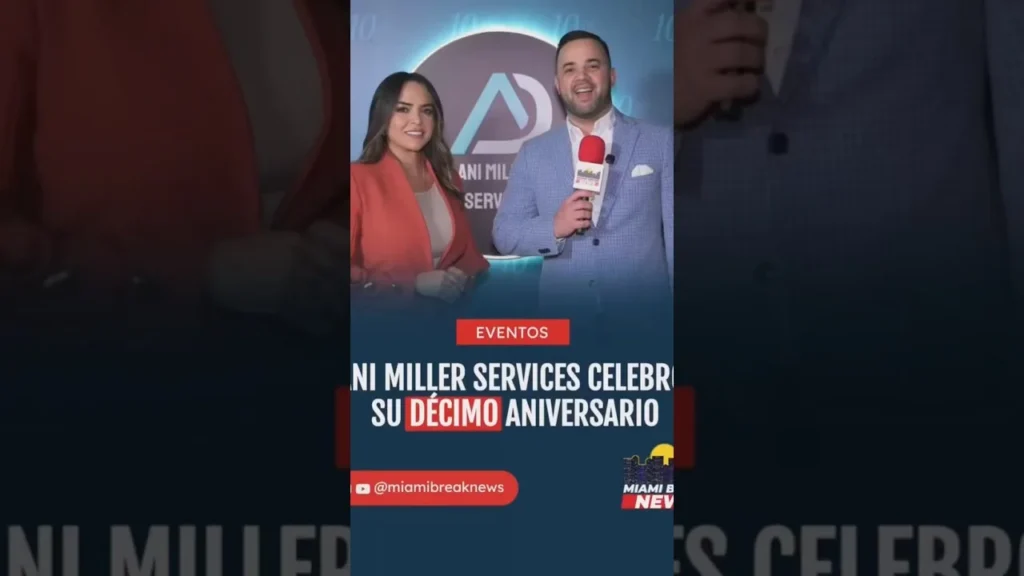
“Focused Discipline”: Ani Miller Services Celebrates 10 Years
Ani Miller celebrated her company's 10 years and her 39th birthday in Miami, and shared the key to her journey.
Read →YOUR NEXT STEP
Before you make an important decision about your money, talk to Ani.
A financial intelligence firm for individuals, families and business owners. In English and Spanish.
Notary Public. I AM NOT AN ATTORNEY LICENSED TO PRACTICE LAW IN THE STATE OF FLORIDA, AND I MAY NOT GIVE LEGAL ADVICE ABOUT IMMIGRATION OR ANY OTHER LEGAL MATTER OR ACCEPT FEES FOR LEGAL ADVICE.
© 2026 Ani Miller Services · Inversiones Los Palapunes Corp.
Ani Miller Services