 Skip to content
BLOG
Smart Financial Planning: Ani Miller on “Porque lo dice tu madre”
Saving, passive income, deductions and what to do if an IRS letter arrives: Ani answers Taty and Camila Guiribitey’s questions.
May 16, 2025 · Interviews · Leer en español
Not sure how to manage your money or how to start investing what you earn? In this episode of Porque lo dice tu madre, Taty and Camila Guiribitey invited Ani Miller to clear up the most common questions about personal finance.
What we talk about
- The ABCs of saving.
- The difference between active income and passive income, and how to start building passive income.
- Taxes: what you can deduct and what you can't.
- What to do if you get a letter from the IRS.
- How to avoid having too much withheld from your paycheck.
The full conversation
In episode 32 of the podcast Porque lo dice tu madre, hosted by the famous “Mamilover” Taty Guiribitey and her daughter Camila Guiribitey, the guest of honor was Ani Miller, an expert in finance and taxes. Between laughs, mother-daughter teasing and plenty of direct questions, the conversation covered the topics that worry every family the most: how to start saving, what passive income is, what you can deduct on your taxes, what to do if a letter from the IRS arrives, how to pay less in taxes as an employee, when it makes sense to start a company and how to use credit cards strategically. Here is the full conversation, told in order.
Solutions, not problems
Taty welcomed Ani by announcing that the night’s topic was going to be “cash” and that her guest was bringing “solutions, not problems.” Ani picked up the phrase right away, because it is exactly the one she repeats at her office.
What your mom just said is something I tell everyone who comes to work with me. The first thing they hear is: solutions, not problems. So write that down.
The ABCs of saving: first, be honest with yourself
The first question was what the “process” is for starting to save: what percentage you should put away, where you need to cut back, whether you have to go without or stop buying handbags and expensive things.
Ani thanked them for the invitation and answered that the first step is not a magic percentage but an honest assessment. Before talking about saving, you have to take a clear look at how much comes in and how much goes out.
The first thing someone who wants to start saving has to do is be honest with themselves. We have to evaluate the client’s profile, because asking someone who earns 100,000 to save is not the same as asking someone who earns a million, or someone who earns 10,000.
Camila pressed with a very common case: can someone who earns 30,000 dollars a year and lives “paycheck to paycheck” also have a financial plan? Ani was clear: yes, absolutely, as long as there is organization. She explained that what usually happens is that when people start earning an income, they go into debt beyond what they make. That is why the starting point is to recognize your real income and, from there, look at what you can do with the free time you have outside your working hours.
Passive income versus earned income
That free time, according to Ani, is the doorway to changing your situation. She suggested making a “sacrifice quota” for a while: using your free hours for extra work that generates additional income, investing that money and starting to build a different kind of income.
Having passive income is completely different from having income earned through work.
Taty, curious, asked her to explain what this passive income thing is. Ani defined it simply: it is income you are not directly working for, any money you receive without needing to be present. She gave several examples:
- Investment properties that you rent out.
- A small house, a car or even a plane that you rent out.
- Investing in someone else’s business, like an ice cream shop, and receiving a share of the profits every month without having to do anything day to day.
We all have a skill
Camila pointed out that many of the people who watch the show do not have that passive income yet. For them, the path starts with a second job or a second business, and that is where Ani shared one of the central ideas of the night.
Not everyone has that passive income, but everyone has skills.
The secret, she said, is discovering what each person likes to do and knowing how to make the most of it. Someone can have an ordinary job where they earn 30,000 a year and, at the same time, be very good at cooking, sewing, decorating or crafts, like the person who had made some flowers to welcome Ani to the studio. Her advice was not to lock yourself into the idea that the only possible income is your current job.
Don’t be blind, don’t box yourself in thinking you only have this job. You have that job to pay the bills, but it won’t let you do anything else. If you make a sacrifice quota and identify what you are passionate about, maybe you can find another way to make money in your free time, without giving up the income that lets you pay the bills.
Taty joked that luckily she worked hard and already has her rental income, because if she depended on her skills she “would be in pretty bad shape,” and she jokingly introduced her daughter as her “passive income” and her “daily expense.” Camila turned the idea back on her: Taty could be a party planner, because nobody comes up with ideas and decorates like she does. “Start building your passive income,” they told her between laughs, and “start charging already.”
The ABCs of getting your finances organized: the budget
Camila, who described herself as “really bad with money,” asked what the non-negotiables are for organizing your finances. Ani’s answer was immediate: the budget.
When a person has an established budget, it is much easier to take full control of their life.
She explained that financial advising is one of the services her office provides, and that when she sits down with a client to evaluate their situation, she always makes the same distinction: in life there are things you need and things you want. To have what you want, you first have to work so that a passive income pays for it, whether it is the handbag, the car or the house of your dreams.
She gave a very vivid example: you cannot start out with an income of 30,000 dollars a year and want to buy a 5,000-dollar handbag. That is why a budget has to start with the basics:
- Define the things you need to live: where you live and what you pay for it, food and basic expenses.
- Accept certain sacrifices at the beginning, because nobody becomes a millionaire overnight.
- Stick to the budget with discipline: the sacrifices you make when they need to be made pay off.
Life is full of sacrifices at the beginning. Not everyone went from zero to millionaire overnight.
The hosts noted that many people spend on one night out at a restaurant what it would cost to get their finances organized, and that it makes no sense not to invest in that when so many people come up to them saying “help me invest” or “I want to be like you.” Camila summed up the feeling with humor: she is “a plane that still doesn’t know when it’s going to land,” and she needs someone to bring her in for a landing.
Taxes: what you can deduct and what you can’t
Taty moved on to taxes and the myths about what you can and cannot deduct, confessing that every tax season she feels like she is being pushed “up against the wall.” Ani answered that there is a very big myth: believing that taxes are simply about paying money to the IRS.
There is a very big myth: people think taxes are about paying money to the IRS, and that is not the case.
She explained that this is what accountants are for, since they study the tax code, and that when a person has a company, they can deduct expenses related to that business’s activity. She mentioned several examples:
- A trip to meet with clients, for example in Spain, if it is a business meeting.
- Lunch with a client.
- Restaurant meals to close a deal.
- Motivational or birthday gifts for employees, for example for an exceptional worker.
Taty shared that at her companies they always buy small gifts for all the staff and that, when they had fewer employees, they once gave a Cartier watch to an employee who deserved it. Ani added that the tax code is very long and that many people, when tax season comes around, only think about “rushing, getting them done and paying,” without knowing what the law allows them to do.
Donations count too
Another example of the same myth, according to Ani, is donations. Many people do not donate because they feel it makes no difference, when in reality donations to qualified foundations are deductions the IRS allows, and they lower the amount the taxpayer owes.
Taty shared her experience: for years she paid a lot of money in taxes, and over the last three years she decided she would rather support organizations like Jackson hospital, St. Jude, her own foundation and Nicklaus Children’s. She put it this way: it is not about whether the IRS deserves it or not, but about doing good for the community and benefiting as well. Ani confirmed it: you help others and you benefit yourself.
Camila asked whether it was true that you can only deduct around 10% of what you donate. Ani clarified that it depends on the taxpayer’s profile: you do not always deduct 100% of what you donated, but rather a percentage tied to the income you reported, with a cap. That is why she did not want to give an exact figure without knowing each case.
Taty added that the tithe given at church and clothing donated at places that issue a receipt also fall into this category. Ani agreed on the key point: always ask for the receipt and keep it.
What to do if a letter from the IRS arrives
The next question was one of the most nerve-racking: what should you do if a letter from the IRS arrives? Taty joked that the first thing is to call Ani Miller. Ani, more calmly, explained that looking for an expert is the right move, but that these letters do not always bring bad news.
IRS letters are not always bad things. Sometimes they arrive because forms were not filed.
She went over how the system works: when you file your taxes, there are third parties that also report information. If you worked for a company, that company reports to the IRS the income it paid you. If you then report a lower income, the IRS catches it, because it has different ways of knowing what you received. Taty confirmed that, as an employer, at the end of every year she sends the IRS what her employees earned. One of the most common reasons for getting a letter, Ani stressed, is missing forms, and the right thing to do is find a professional to help resolve it.
The IRS does not call you to ask for your Social Security number
The hosts asked whether the IRS can call you on the phone to ask for your Social Security number. Ani’s answer was a resounding “never, never, never”: the way the IRS communicates is by postal mail. One of them shared that she has been called several times by people claiming to be from the IRS who ask for the last four digits, and that her husband hangs up right away because “it’s to steal your information.”
The advice for the audience was clear: be wary of calls and emails that claim to come from the IRS, because scams today are electronic too. Communication from the IRS arrives as a physical letter to your home.
How to keep them from taking so much out of your paycheck
Taty then raised what hurts employees the most: what can they do so that not so much is taken out of their paycheck? Ani explained that there are two main options and that it all depends on how much the person earns.
She started by recalling the general rule: employees who are paid on a W-2 are not allowed to claim expenses to reduce their taxes. But she mentioned an exception related to real estate.
- If an employee invests in a property and rents it out for short stays, through platforms like Airbnb or Vrbo, rather than as a long-term rental.
- As she explained, under the rules that apply to that type of activity, the losses that investment generates can be carried over to offset the W-2 income.
- The result can be a refund of part of the money that was withheld from you during the year.
The hosts celebrated it as a double piece of advice: first learn to invest in real estate, and then learn how to get the tax benefit from that investment. Because these rules are complex, it is a topic to review case by case with a professional.
Why does it make sense to start a company?
“I love this next question,” Taty said before asking how and why it makes sense to start a company instead of getting paid as an individual or as self-employed. Ani explained that there is a big difference because of the self-employment tax, which is around 15.3% and which individuals pay on what they earn.
Starting a company makes a big difference.
She explained that with a company, for example an S corporation, taxes are calculated within the company, and the resulting profit or loss passes through to the owner’s personal taxes. With the right structure, that self-employment tax can be reduced. That is why she encouraged listeners to start their own “little company” based on what they know how to do, whether consulting, cleaning or any other skill, and report the profits from that second business there.
Being a W-2 employee and having your own business at the same time
Camila used herself as an example: if she works from 8 to 4 at a company as a W-2 employee, can she build her passive income with another business at the same time? Ani told her yes. If after work she has her business, which they jokingly named “Camila’s Lazos” (Camila’s Bows), it can be set up as an S corporation. She would then have two documents: her W-2 as an employee and a K-1 form, which is the one the S corporation issues. Both come together on the personal return, and it is the combination of the two that makes it possible to adjust the taxes.
Practical tips for credit cards
Then came the practical tips for getting your finances organized, and Ani’s first one drew protests: take the credit cards out of your wallet. Camila confessed that she has them on her phone anyway. Ani explained why she says it.
Banks often offer 0% interest for 12 or 18 months and other promotional rates. The problem is not the card, but the lack of planning. In her advising sessions she has clients who, with a strategy, move their debt from one bank to another taking advantage of those promotions and have gone five, six and even eight years without paying interest, using the bank’s money.
You can’t use credit cards if you are paying more than 20% interest, because what happens to people is that they pay and all their money goes to interest. The debt doesn’t go down, it’s never going to go down.
Her rule for getting organized is simple:
- If you have 1,000, you cannot spend more than 1,000.
- Take the cards out of your wallet, because using them becomes a habit: “it’s 15, it’s 20, it’s 50,” and it all adds up.
- Take advantage of promotional rates only if you have a plan to pay within that period.
- There is no ideal number of cards. Ani shared that she has 12 and hardly uses any of them; she keeps them active so they do not get closed and to protect her history, because credit is not just the score number, you also have to build your history.
- Paying for everything by card can be a good idea if it is done strategically: you earn points you can use for travel, and you pay on time so you do not rack up interest.
All of this, she explained, is part of the financial plan designed for each client. Camila pictured it as a little chart with small monthly goals until you reach the objective, and mother and daughter ended up joking about who should book the appointment first to review how the household cards are managed.
Planning from childhood
Camila asked whether financial planning should start at 18 or earlier. “Earlier, absolutely,” Ani answered, and shared that she has three children and that her youngest son, who was about to turn two, already has an IUL, an indexed universal life insurance policy, because she has already started planning his financial future. Taty shared that her granddaughters also have something set aside thanks to their grandparents, and Ani summed up the idea in one phrase: the magic of compound interest.
401(k), IRA and Social Security
The next question was whether contributing to a 401(k) or an IRA helps when it comes to deducting taxes. Ani said yes, because the money sent to those accounts is tax-free at the time the contribution is made.
Taty wanted to know what happens to that money if the person dies. Ani explained that the 401(k) goes to the people you have designated as beneficiaries. Then Taty mixed the question up with Social Security retirement, and together they clarified the difference: for a Social Security pension you need to have accumulated the necessary contributions to qualify, while a 401(k) is money you contribute from your own income and, for that reason, it is not lost.
The moral: it’s not what you earn, it’s what you spend
At the end, Taty asked Camila what lesson she was taking away. Camila said that many people have no strategy with their money, get overwhelmed by debt and feel they cannot get out, and that the first thing is to breathe, “have a little cup of tea” and find a financial advisor who educates you and gives you concrete ideas. Taty said she would book an appointment too, for her daughter and for some of her own businesses.
Ani closed with the idea that sums up her whole philosophy.
It doesn’t matter whether you earn 3 pesos, 4 pesos or 5 pesos if you have a good financial education, because here it’s not about what you earn, it’s about what you spend.
She added that the key is strategy, because of all the money a person can keep in their pocket if they have one. She illustrated it with her own experience: she has clients who earn a million and have financial problems, and clients who earn 200,000 and are doing very well financially. When Taty asked whether that applies even to people who earn little, Ani was emphatic: everyone needs a financial strategy.
Taty and Camila thanked Ani for teaching and educating the audience, and Camila signed off promising not to spend anything all week. The conversation leaves a simple and powerful lesson: with an honest budget, a second source of income based on your own skills, good credit management and a well-thought-out tax strategy, anyone, no matter how much they earn, can start building financial stability.
Video: PQ Lo Dice Tu Madre channel, episode 32.
This article is an English translation of the original Spanish version. Quotes have been translated from Spanish. Leer en español.
BOOK A VISIT
Let’s talk about your money
Leave your details and we will call you to understand your situation. We speak English and Spanish.
KEEP READING
More from the blog

“Trust Doesn't Mean You Stop Asking”: Ani Miller on La Mesa Caliente
On La Mesa Caliente, Ani Miller explains why handing all your finances to your partner can leave you vulnerable.
Read →
Ani Miller Services Turns 10: Univision KUKC’s Coverage
Univision KUKC was at the 10th anniversary celebration of Ani Miller Services with friends, family and clients.
Read →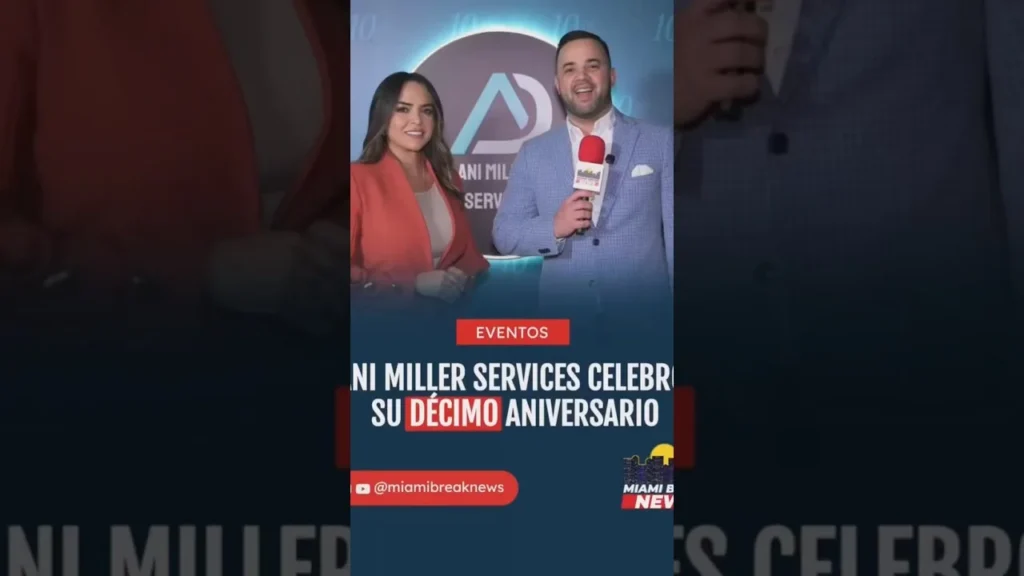
“Focused Discipline”: Ani Miller Services Celebrates 10 Years
Ani Miller celebrated her company's 10 years and her 39th birthday in Miami, and shared the key to her journey.
Read →YOUR NEXT STEP
Before you make an important decision about your money, talk to Ani.
A financial intelligence firm for individuals, families and business owners. In English and Spanish.
Notary Public. I AM NOT AN ATTORNEY LICENSED TO PRACTICE LAW IN THE STATE OF FLORIDA, AND I MAY NOT GIVE LEGAL ADVICE ABOUT IMMIGRATION OR ANY OTHER LEGAL MATTER OR ACCEPT FEES FOR LEGAL ADVICE.
© 2026 Ani Miller Services · Inversiones Los Palapunes Corp.
Ani Miller Services