 Skip to content
BLOG
“From Every Setback, a Service”: Ani Miller on the Women's Chamber
Ani Miller shares how each challenge she faced as an immigrant became a service of her company, and what she has learned about leadership.
February 2, 2026 · Interviews · Leer en español
On the podcast of the Women's Chamber of Commerce in the United States, Ani Miller talked with Carolina Melo about how to turn challenges into business opportunities.
What we talk about
- The IRS letter that gave rise to her tax business
- The car contract with a balloon payment and her vehicle purchase advising service
- Focusing on your business idea and choosing your circle wisely
- How she went from working alone to leading a team of 20 people
- Her habits of pausing, gratitude and family time
The full conversation
On the podcast of the Women's Chamber of Commerce in the United States, host Carolina Melo welcomed Ani Miller, founder and CEO of Ani Miller Services, to talk about something every woman entrepreneur has experienced: challenges and, above all, how to turn them into opportunities. Over half an hour, Ani walked through the setbacks she faced when she arrived in the United States, how each one ended up becoming a service of her company, how she went from doing everything herself to leading a team, and the habits that keep her grounded.
Ani opened the episode with an idea that runs through the whole conversation: starting a business in the United States brings constant challenges, but when you find, within what you do, a life purpose that lets you train and guide other people, the load becomes lighter.
The IRS letter that changed her mindset
Carolina got straight to the point and asked what challenge changed her mindset and led her to the business she has today. Ani answered that it all comes from her falls and from her experience as an immigrant. When she arrived, she hired a tax preparation service, and when she received a letter from the IRS, she called the person she had paid to ask for help. The answer was that the preparer was busy and that Ani had to resolve it herself.
For someone who came from many years in banking in Venezuela, where quality of service is essential, that treatment was a blow. Ani said you arrive with the idea that in the United States everything works perfectly, and she found herself dealing with someone who charged for a service and then would not show their face.
If this is happening to me, and I'm an accountant by profession, what could be happening to everyone else who doesn't even have a clue about numbers?
At the time she did not speak English and, she admitted, she was very afraid, because when an IRS letter arrives you hear so many things that it is easy to get scared. Even so, she decided to see it as her opportunity to learn, get trained and go to the IRS office herself to understand what had happened.
From Amazon driver to 30 clients in her first year
Carolina wanted to know how that challenge took her to the next level. Ani explained that finding an institute where she could get trained was not easy, because it was the height of tax season, when every accountant is swamped and a deadline is looming. After her training, she went to the IRS and understood everything that had happened.
At that time she was working as an Amazon driver. When you arrive in a new country, she said, you have to reinvent yourself, and the bills have to get paid. She told the story to her coworkers, and their reaction surprised her: since she had already solved her own problem and now had a license to prepare taxes, they wanted her to do theirs.
None of them knew about her background or that she had gone to college. They knew her only as a fellow driver, and still they trusted her because she had been through the problem and solved it. One of them told her plainly: he preferred to have her do his taxes because, if he got a letter, she would actually answer him.
And that year, Carolina, I got 30 clients, the first year.
From there the business snowballed. Ani acknowledged that today she invests in marketing, but she was candid: what has taken the company to where it is today is client referrals. “There's nothing better than that,” she said.
Personalized service as the difference
Carolina pointed out that there are a great many people on the market offering tax preparation, and asked what Ani has that makes her clients comfortable enough to recommend her by word of mouth.
Ani credited personalized service. Her rule is simple: if the client has a problem, the problem becomes the team's. She said many people come to her who are not yet her clients, referrals who are frightened because they received a letter and their accountant is not answering them. That is why, as the business has grown, she has focused on bringing on and training people so that no one who calls her office goes without being helped.
When someone has a problem, they need to have someone on the other end with the solution.
The balloon-payment car and the vehicle purchase advising service
Carolina returned to the subject of mistakes, noting that many of them take us to other places, and asked her for another story in which something went wrong and she had to pivot.
Ani said she bought a vehicle trusting a person she had been referred to. She still did not speak English, she signed the contract in good faith, made a $5,000 down payment and drove off with the car. Some time later she had an accident: an undercover police officer crashed into her. Since she worked with the car, she went to the dealer to trade it in and asked how much she owed, thinking that after the down payment and a year and a half of payments the debt must have gone down.
The answer was that she owed exactly what the car was worth. They explained that her contract had a balloon payment: 71 installments that covered only interest and a 72nd payment that carried the full price of the vehicle. Everything she had paid had been interest, and the down payment had gone to fees.
Businesses exist to make money, but you can't lose your ethics, because you have a client today, but tomorrow, when the client realizes what happened, you'll never have them again.
Since she needed the car for work, she took it as one more lesson. Before buying another vehicle, she decided to understand how car sales and the financing side work. She said, laughing, that dealers are going to hate her for saying it, but they have their strategies: they get people to come in, wear them out, wait until it is ten at night and then present “what they managed to get,” and people sign because they are tired.
Ani first applied what she learned to her own case. She was carrying the entire negative balance of that wrecked car, which she still owed in full, and she worked it down strategically: she changed cars five or six times, always when the market was favorable, gradually rolling part of that negative equity into the next vehicle. People found it strange that she changed cars so often, but it was the plan she had to follow. She said that she recently went to sell her car, a 2020 model, and was offered about $30,000 when she owed about $10,000. She also used the vehicle's depreciation on her taxes.
You see, the long-term strategy worked for me.
That experience gave rise to another service. Ani advises her clients so they do not go to the dealer alone:
- Her team negotiates everything on the client's behalf: interest rate, term and the warranties the dealer will try to offer.
- The client goes in only to sign, and the visit to the dealer usually takes about 40 or 45 minutes.
- This keeps the client, when going on their own, from having their Social Security number run through dozens of banks and their credit score lowered.
Ani explained that she saw that challenge as an opportunity because it was surely happening to many people who do not understand numbers. She had the foundation, from her years in various positions at a financial institution in Venezuela; what she was missing was an understanding of how the market works here. And she made her work philosophy clear:
I will never suggest that you do something I haven't already tried myself, that I know works and that I can show you with results.
The people who hurt you are shaping you
Carolina observed that Ani has practically built a business out of every challenge she has faced since arriving in the United States. Ani acknowledged that at the time she wondered why these things were happening to her, but today she understands that those people were not harming her: they were shaping who she is today, and now she can share that knowledge.
She clarified that it is a business, but that her mission is for people to take advantage of the benefits this country offers, which are many more than people imagine.
Anyone can get out of debt in less than a year, anyone can be financially successful in less than 2 years. All they have to do is follow a plan, but with discipline.
Carolina connected that idea to the Chamber's work: providing information and valuable content, and connecting women so they can go from an idea to a real business, one that does not rest on a single person but generates income, jobs and an ecosystem of its own outside their home country. She noted that many women left their countries for different reasons, and that it is valuable to look back and recognize that mistakes, lack of information and decisions made without knowing the system also brought them to where they are.
Focusing on your business idea and cleaning up your circle
Carolina asked what qualities she sees in people who manage to take a mistake or an obstacle and turn it into something beneficial, especially when so many people make bad decisions or sign agreements they do not even understand.
Ani said that just the day before she had told a client that many business owners focus on the wrong things. If you have a business idea, you have to focus on it and make it grow. You cannot do everything. She understands that at the beginning there are costs to watch and little budget, but she insisted that you have to find people who become part of the team and help you get from one point to the next.
That same client, she said, came in disoriented and left ready to take on the world. He had a lot of potential, but for the past three years his taxes had been done incorrectly, without applying the available tax strategies, and he had paid far more than necessary. He still had time to correct course. Ani said she is passionate about seeing families grow financially thanks to guidance and support.
Her advice for anyone who wants to start a business was clear:
- Identify what you like to do. When you work with passion, the odds of success are very high.
- Delegate what is not your specialty. If you have a flower business, focus on selling flowers, not on keeping the books for the flowers. Leave that to someone who supports you.
- Watch your circle. Pay attention to whom you tell your plans and who you spend time with, because people who are not on the same wavelength will tell you not to do it.
- Seek advice from people who have results. Surround yourself with someone who is where you want to be.
Ani illustrated it with her own story. When she decided to open an office in the middle of the pandemic, everyone told her she was crazy, that everything was closing and that she had better keep working from home. She saw it the other way around: precisely because no one wanted to open, she had plenty of room to negotiate the price.
I have to do what nobody else does. If I do what everyone else does, I'll get the same results.
She also warned against asking for business advice from people with no knowledge of the field. She said many people abandon an idea because a friend told them not to do it, and when you ask what that friend does, it turns out she is a homemaker. She clarified that there is nothing wrong with being a homemaker, but you cannot ask someone with no experience in business, finance or economics for advice on those subjects, because you can end up discouraged. Carolina agreed, recalling the idea that you are the result of the five people you surround yourself with.
When to stop doing everything alone
Carolina cited a CB Insights finding from an analysis of more than a thousand startups, according to which part of the failures are attributed to not knowing when to pivot. She asked at what point Ani understood that the company had to grow and that she could not keep being the one who opened the door and did practically everything.
Ani said that at first, everything ran through WhatsApp on her personal number. People started messaging her at one or two in the morning, and she thought that she could not take care of clients at that hour. She put herself in the client's shoes: if someone comes in with a problem and Ani is busy with other people, who takes care of that client?
Not having people around you to support you will leave you more money at first, but when the quality of service drops, clients are going to leave.
That happened to her in 2019. She began bringing people on, and growth was fast: she hired one person, three months later she had to add another, and it went on from there. Today, during tax season, she has 20 people working, because that is the level they need to serve all their clients.
Commitment, the secret of a well-oiled team
Carolina noted that once you start managing staff, you also have to wear the human resources hat, and that the perfect team does not exist. She asked what Ani does to make her team run like a well-oiled machine.
For Ani, the secret is commitment. She said that in her banking career in Venezuela she had many people reporting to her and that she has always been very strict because of her discipline, which sometimes clashes with people's personalities. That is why she has always sat down one-on-one with each person to ask about their goals. If someone is only looking for a place to put in their hours, this is not the company for them, because you cannot offer the client something that does not exist inside the house.
Every team member has to have the drive to get ahead and understand that they are part of a company with a purpose: to educate. Ani said her clients are mostly from the Latino community, but they also serve the American market, and it strikes her that even many Americans do not understand how the system works. She explained that she was married for many years to a U.S. citizen, and that many friends and acquaintances from that period are still her clients and have referred others to her. It caught her attention that people who have lived here their whole lives did not know that the tax code changes often and that you have to stay on top of what you can and cannot do.
When it comes to staff, Ani said she tries to be fair with salaries, bonuses and commissions, and that her rule for the team is to always put themselves in the client's shoes.
What you don't like having done to you, you can never do to a client.
She said that when someone asks one of her clients what Ani Miller is like, the answer is usually about the team: that when you call, everyone gets involved, and it feels as if the whole office stops to solve that person's problem.
Ani spoke with pride about the people who work with her. Her mother works with her, as do her older sister and her younger sister, along with people who have been with the company for many years and have grown not only in knowledge but also financially. She recalled that the office started with a used desk bought on OfferUp, with a flaw on one side, and that today they work in their own office, with everything new and more spacious areas. She said she is very grateful, because without her team the company would not be where it is.
Working with family: leading by example
Carolina asked how she handles the challenge of working with her mother and sisters, when telling a family member certain things can be harder than telling someone else.
Ani admitted that it is harder, but said she has always been direct and honest. She has told them she adores them, but that this is a business and that the three of them, precisely, have to set the example. If someone on the team arrives at 9:30, they will look into why, but the three of them have to be there at 8:50. There are no exceptions for being her mother or her sister.
Being a leader is one thing and being a boss is another. Anyone can be a boss. Everyone wants to follow a leader, but that's because a leader inspires.
Ani believes in commitment, but commitment generated by example, not by demands. Everyone follows the same rules she does. During tax season, she said, she leaves the office at one, two or three in the morning, while sending her team home to rest at eleven so that the next day they are “fresh as a daisy.” They see that effort, and it teaches more than any instruction. Carolina agreed that this is how true leaders run companies today, and that she wishes every company had leaders and not bosses.
How she takes care of herself: pausing, gratitude and family
Carolina raised a topic she considers key for any business owner: mental health, with the stress of finances, commitments and the responsibility of changing the lives of the people who work with you. She asked how Ani takes care of herself so she can go out every day and be that example.
Ani said that for many years she has had the habit of pausing every night before going to sleep and again every morning before leaving home. She prays and thanks God for life, for her family's health and for the chance to always find a solution, even when challenges come up. She also asks for help to always be fair, because when you are involved in many things at once you can lose your humility and your essence.
God, if I'm drifting away, bring me back, pull me in and put my feet back on the ground.
She also describes herself as a hands-on mom. She has three children; the youngest is two, and with the two older ones she has a meeting every night, Monday through Friday. Since they are night owls like her, whenever they get home they tell her “Mom, let's go to the kitchen” and they talk about how their day went, so much that sometimes she has to ask them to give each other a chance to speak. On weekends everyone is busy with their own activities, but during the week that meeting is a fixture. For Ani, that time reminds her that everything is worth it, because her children are watching everything, and if she wants them to follow the example, she has to show it to them.
What she would tell the Ani of five years ago
Carolina asked what she would tell the Ani of five years ago, knowing what she knows today about handling the challenges of owning a business.
Ani said she would tell her to trust. She did not deny that each of those blows affected her deeply on an emotional level. You try to move forward and suddenly you take a hit that someone without financial knowledge might never recover from; she recalled that, with the car, two years had gone by and she still owed its full value. And she explained that each of the five or six services her company offers was born from something that happened to her.
Today I say, thank God that woman didn't help me, thank God that man scammed me, because that's how I came to understand how the system worked.
She said something similar happened with her immigration process. Today she is a U.S. citizen, but at one point she hired a lawyer, and her residency application was denied because the law office did not update her change of address and she never received the interview notice. When she got no answers, she did what she always does: she educated herself, understood the process and managed to resolve her situation. What she once experienced as harm, she now sees as people God put in her path so she could learn.
Carolina summed up the conversation in one sentence: from every difficult situation has come a service that is changing other people's lives so they do not go through what she went through. “That's right,” Ani confirmed.
Her current goal: living off her investments
To close, Carolina asked what opportunity she is pursuing today that was born directly from a past challenge.
Ani said she is already an investor and has several rental properties, something she also teaches her clients, explaining how they can get started. Her goal is to reach a point where she does not have to work and her investments pay for her lifestyle, with income that is entirely passive. And that goal also came from a challenge: buying her first house was, in her words, a crazy experience in which everything went wrong, but that she managed to resolve in the end.
I want to become just an investor, and not have to work anymore.
Carolina joked that she wanted to take that course too, and thanked her for sharing how each challenge became a business model that works. Ani closed by saying the road has had its bitter moments, but it has been a beautiful experience, above all because she can guide other people and see their results. When a client achieves something, she said, her team is behind them cheering them on. And she made clear that the credit belongs to the clients, for their discipline, even if her team contributed its small part.
The conversation leaves one central idea: the setbacks Ani faced when she arrived in the United States, from an unanswered IRS letter to a car contract she did not understand, became the services she offers today so that other families do not go through the same thing. Behind that growth are discipline, a committed team, leadership by example and the conviction that you never recommend anything you have not tried first.
Video: Women's Chamber of Commerce in the United States, podcast hosted by Carolina Melo.
This article is an English translation of the original Spanish version. Quotes have been translated from Spanish. Leer en español.
BOOK A VISIT
Let’s talk about your money
Leave your details and we will call you to understand your situation. We speak English and Spanish.
KEEP READING
More from the blog

“Trust Doesn't Mean You Stop Asking”: Ani Miller on La Mesa Caliente
On La Mesa Caliente, Ani Miller explains why handing all your finances to your partner can leave you vulnerable.
Read →
Ani Miller Services Turns 10: Univision KUKC’s Coverage
Univision KUKC was at the 10th anniversary celebration of Ani Miller Services with friends, family and clients.
Read →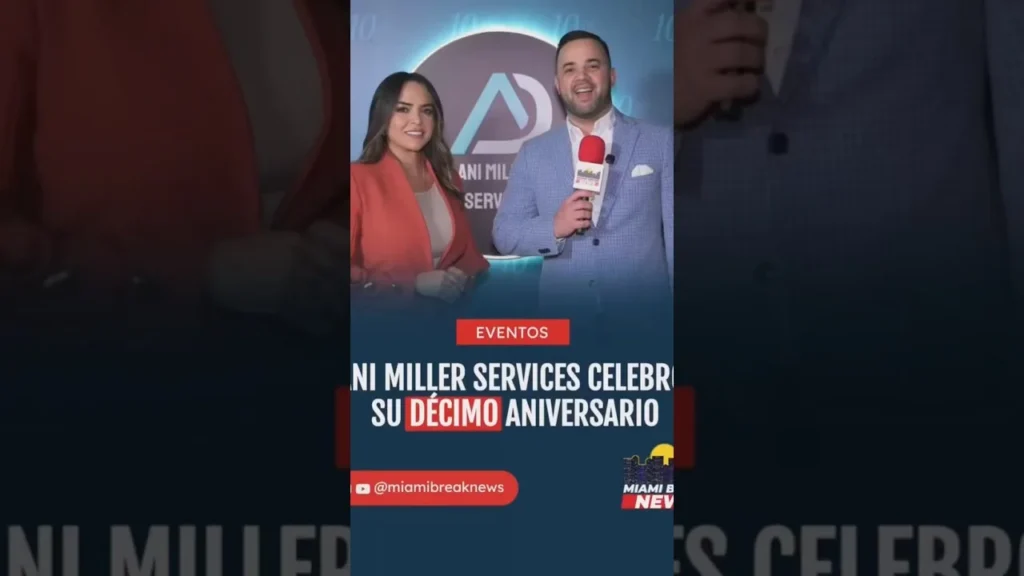
“Focused Discipline”: Ani Miller Services Celebrates 10 Years
Ani Miller celebrated her company's 10 years and her 39th birthday in Miami, and shared the key to her journey.
Read →YOUR NEXT STEP
Before you make an important decision about your money, talk to Ani.
A financial intelligence firm for individuals, families and business owners. In English and Spanish.
Notary Public. I AM NOT AN ATTORNEY LICENSED TO PRACTICE LAW IN THE STATE OF FLORIDA, AND I MAY NOT GIVE LEGAL ADVICE ABOUT IMMIGRATION OR ANY OTHER LEGAL MATTER OR ACCEPT FEES FOR LEGAL ADVICE.
© 2026 Ani Miller Services · Inversiones Los Palapunes Corp.
Ani Miller Services