 Skip to content
BLOG
“Money never leaves, it changes hands”: Ani Miller on Mentes Poderosas
Ani Miller talks with Betty Palomino about her banking career, the scams she faced on arriving in the U.S., and how to start investing with a plan.
September 11, 2025 · Interviews · Leer en español
On Mentes Poderosas with Betty Palomino, Ani Miller shared how she went from banking in Venezuela to starting over from scratch in the United States, and walked through her method for getting out of debt and investing.
What we talk about
- Her banking career in Venezuela, from age 16 to vice president of business
- The car contract with a balloon payment and her decision not to play the victim
- Why taxes either lift you up or sink you
- Real estate, tax benefits and the "sacrifice quota"
- Mental ceilings and the books that shaped her
The full conversation
In a new episode of Mentes Poderosas, recorded in Miami, host Betty Palomino sat down with Ani Miller, Venezuelan entrepreneur and CEO of Ani Miller Services. For more than forty minutes, Ani looked back on her banking career in Venezuela, the reasons she had to start over from zero in the United States, the scams she went through when she arrived and how each one became a service at her company. She also talked about real estate, taxes, her method for getting out of debt, and the books and mentors that shaped the way she thinks.
An entrepreneur who always gets back up
Betty opened the interview by asking her to define herself. Ani answered right away:
I define myself as an entrepreneurial person who, even if she falls, is willing to get back up as many times as it takes.
From banking at 16 to vice president of business
Betty asked her to describe her life in Venezuela before she came to the United States. Ani explained that she started working very young. She graduated from high school early and joined a Venezuelan program that helps recent graduates learn a trade. Her sponsor in that program was a bank, which ended up hiring her.
That is how she started working in banking at 16, while studying at the university at night. She had a banking career of about 12 years, moving up from one position to the next until she became vice president of business. That, she said, is where she built her career in finance.
Why she had to start from zero
By 28, Ani had already been married, divorced and had two children. She explained that, because of a family matter, after her ex-husband's death in Venezuela she found herself needing to come to the United States to keep her family safe. At the time of the interview she was about to mark ten years in the country.
Betty asked what it was like to start from scratch, as every immigrant has to. Ani described it as quite hard, given everything you have to do when you arrive. She made clear that she has always been open-minded and willing to do whatever it takes, but that when she arrived she was deceived and scammed by several people, including some she had known back in Venezuela.
The house, the car and the balloon payment
Betty wanted to know how they had deceived her. Ani gave a first example: she rented a house, made all the payments and later discovered that the documents she had been given did not match the transaction as it had been presented to her.
That same person recommended where to buy a vehicle. Ani made a $5,000 down payment, but that money never showed up in the contract. She did not speak English and believed what she was told. About two years later she had an accident and, when she tried to trade in the car, she was told she owed the full value of the vehicle.
She could not believe it: she had made a down payment and had been paying for two years. But the contract said there were 71 payments of pure interest and that payment number 72 was a balloon payment for the price of the car. Betty, surprised, asked whether she had not bought it at a dealer. Ani clarified that she had, at a large dealer, but since she did not have a Social Security number at the time, they offered her "special finance," a special financing arrangement handled by the dealer itself.
The math was simple. If the car cost $25,000 and she had put down $5,000, at the very least she should owe $20,000. But they told her she owed the full $25,000, because the down payment had gone to administrative fees and the 24 payments she had made had worked like rent that did not reduce the principal at all.
I was stuck with a wrecked car that I owed $25,000 on.
Not playing the victim: learning from what happens
Betty asked what she did next. Ani replied that she made a decision that defines her whole story:
I decided I was not going to play the victim, because yes, something had happened to me, but what I had to do was learn from the things that were happening to me.
She set out to learn how the car business really works in the United States, and car-buying advice was one of the first services she began offering at her office. She explained that her entire company is built on her experience as an immigrant. Today she tells her clients not to go to the dealer alone: when they go, it is because the deal is already done and all that is left is to sign.
The IRS letter and the birth of the tax business
The exact same thing happened to her with taxes. Ani hired someone to prepare her return, paid them, and then received a letter from the IRS. When she called to ask how to respond, no one ever helped her. She went to the office and was told they were very busy and that she should sort it out herself.
That day she thought that, as an accountant, she had to find a way to solve it. She looked for an institute that would give her a course in the middle of tax season, because she had a short deadline to answer the letter, did not know how to do it and did not speak English. They took her in, explained how to respond, and she later obtained her license to prepare personal taxes.
When she told friends and family what had happened, the reaction was the same one she would hear many times afterward: they wanted her to do their taxes. They told her that if she had gone on her own, without speaking English, to defend her letter, they would rather trust her than some stranger who might not know what they were doing. That is how it started, and in that first year she prepared taxes for about 30 clients.
A mistake in her immigration process
Ani shared another similar experience with her residency process. After getting married, she hired a law firm to handle her case. When she bought a house and moved, she reported the change of address by email and was assured that everything had been updated. Time went by, and she could see online that her interview had been scheduled, but the letter never arrived, so she called. She was told the interview had been two weeks earlier: her file still had the address of her previous apartment. She missed the appointment and her residency was denied.
When she was told she had to wait, she did what she always does: she sought out training, understood what she needed to do and managed to resolve her case. Today, thank God, she is a U.S. citizen. "That's another experience that happened to me here in the United States," she summed up.
Betty asked where her company is today, and Ani mentioned her office in Cooper City, Florida. The host pointed out that every service at her company was born from an experience in which Ani chose not to be a victim but to find someone who could teach her, and that this is how she found the need.
Quality of service and organic growth
Ani explained that her reasoning was always the same: if this was happening to her, it was surely happening to many other people too, especially those who, like her back then, could not communicate in English.
She credited the company's success to the quality of service she brings from traditional banking, where the client would sit down and the banker would genuinely care about their situation. She carried that training into her business. She said that although people always see her face, behind it there is a trained, empathetic team, and that when a client has a problem "the office comes to a standstill" to help them.
I grow in clients, I can tell you, by between 200 and 250 clients a year, but it's organic growth.
These are clients referred by her own clients, who bring in family and friends because they are happy with the service. Betty called it the power of word of mouth: providing good service, with honesty and integrity, inevitably brings in more clients.
Social media and working with clients
Betty mentioned that she had also seen her being very active on social media. Ani was candid: word of mouth was still working very well for them, but social media has become very powerful because people go everywhere with their phones in their hands.
She explained that the content side came about thanks to some clients. They had been denied a loan to buy a home because they had been poorly advised. A friend referred them to her, Ani fixed their taxes and they were able to buy their home. It turned out they had a marketing agency focused on content, one that films and edits, and they ended up working together.
That reflects a method Ani applies at her office: supporting those who support her business.
- If a client has a business, she tries to promote it and connect them with people who need what they offer.
- When she needs a service, she first checks what services her own clients offer.
- For example, for her office's grand opening she asked to hire her own clients for the decorations.
Maybe I know people who need the things you do, and I can connect you. That's how we all grow.
Taxes either lift you up or sink you
Ani explained that handling every service under one roof gives them a different perspective when preparing taxes. And she shared one of the central ideas of the interview:
People think doing their taxes is about complying with the government. It has nothing to do with complying with the government. It's about the fact that taxes either lift you up or sink you.
If you file a poorly prepared return, it sinks you. And if you report very low income, you have access to nothing, not even buying a house. She shared a story from the day before: a client called her from the bank because his loan was not being approved. Ani reminded him that she had explained it to him: he had wanted to lower his income with all his expenses so he could get the refund for his children, and you cannot have both. If you lower your income, you cannot show the bank a high income.
The client admitted she was right, and they left it for the following year. For Ani, that is what she calls a "sacrifice quota": the person has to decide what they want, whether to get the refund or buy their house.
She came back to the idea of not playing the victim: things can happen to you, but if you play the victim, you give other people control over you. If instead you say "this happened to me, I'm going to figure out how to solve it," you can get something wonderful out of what happened to you.
The worst moment
Betty asked what her biggest failure has been. Ani went back to the car story, because it came at the worst possible time. She was working deliveries with that car, which was how she put food on the table. She had come to the country with her two young children and was the main source of income for the household; her mother also worked and contributed, but she got sick, and at the same time her sister became pregnant. In the middle of all that, someone crashed into her car and she discovered she owed its full value.
Betty lamented that there are people with that mindset of harming others. Ani replied that everything eventually falls under its own weight, and the host reminded her that, without that experience, she would not have the company she has today. "That's right," Ani agreed.
The first house, bought in the middle of the pandemic
Betty asked her to share her experience with real estate. Ani explained that, because of her banking background, she always had a structured plan. When she married an American, she proposed that they rent for a year and then move into a home of their own. He asked her whether she thought it was that easy. She told him it was not easy, but it was not impossible either, and if it was not impossible, they had to try.
The pandemic arrived and their rent went up. Ani had their taxes in order and told him they were ready to look for a house. He replied that they were in a pandemic and could not go out. Her answer, laughing: "If we die, we die with a house."
She explained that she comes from a family in which her father owns rental properties, and she grew up seeing how those properties keep generating income for a lifetime; the year before she had gone back to Venezuela and the houses still belonged to her father, with the same tenants. On top of that, since nobody wanted to go out during the pandemic, conditions were very favorable: as she told it, they were offered closing cost coverage and even extras like an electric garage door. She was doing the deal with a friend who was a real estate agent, someone she had met at English school.
Her husband went to see the house but did not want to sign. He was afraid, partly because an aunt had told him it was crazy to take on that risk with people dying of COVID. Ani told him that, if they did not die, they would still have to keep paying rent, and that their rent had gone up by about $400 a month. With the house they would pay less than they were paying in rent, and they already had the money for the down payment.
Ani recalled, with humor, that she told him quite seriously that if they did not buy the house they would have to separate, and she gave him 24 hours to think about it. Her argument was clear: "What I can't do is drag someone into a life that I want to build and that you don't see." The next morning, he told her he was going to get ready, they left within half an hour and he signed.
Today they own almost ten properties. They bought that first house for less than $400,000, with an interest rate of just over 2%, and its value has risen considerably since then.
In a crisis, money changes hands
Ani connected that story with a message she had just posted on social media with her marketing team: during crises, some people have made a great deal of money.
In times of crisis money doesn't go away, money never goes away. All that happens is that money changes hands.
If you get scared, the money will not end up in your hands. She made clear that this is not about taking reckless risks: you have to educate yourself, find the right people to guide you and do your market research. But nothing ventured, nothing gained, and the fear of losing also keeps you from winning.
Advice for those who just arrived
Betty asked what she would say to someone who has just arrived in the country, who is starting from zero and is afraid to begin. Ani offered several keys:
- A job with fixed hours will not change your life. That job lets you pay the bills; the change depends on whether you are willing to make a sacrifice.
- Forget the patterns you bring from your home country. You have to adapt to the country, because the country is not going to adapt to you.
- Leave your ego behind. Many people arrive with "I used to be, I used to have, I used to do," and that keeps them from starting over.
Ani observed that, unfortunately, the older the person, the more mental ceilings they tend to have. Betty said she loves that expression and remarked that mental ceilings are imaginary: we create them ourselves.
How she broke through her mental ceilings
Betty asked how she broke through her own. Ani explained that she learned finance from inside a bank, and shared what led her down that path. As a child she had a neighbor who left for work every day well dressed and who, over time, bought herself a new car. One day Ani worked up the courage to ask her what she did for a living. The neighbor told her she worked in the business area of a bank, and Ani noticed how she had grown financially, little by little, through her work. That is why, when the youth program gave her three options to choose from, she picked the bank.
At the bank she had people who trained her very well and who today are great friends. She became a manager for the first time at 21, with people aged 40 and 50 reporting to her. She attributes it to having the humility to learn.
No matter how much you know, you can always learn from anyone, every single day.
She said she goes everywhere she is invited, because she always learns something. That humility, she said, helps you understand that mental ceilings are your own and that there is no limit. She also wants the people around her to grow: "When you help someone else shine, I think you've understood everything, because we all shine."
When not even she believed
Betty asked what she thought of herself when no one believed in her vision, not even she did. Ani admitted that we all have those moments of doubt, and that she would think about how alone she was in this country. But right away she stands in front of the mirror and asks herself what is wrong with her: if she has turned everything negative that has happened to her into something positive, of course she can do it.
What helps her most to change those thoughts are her children. Now teenagers, she sees the reflection of her example in the people they have become, in how they talk and in what they care about. They have seen hard, focused and disciplined work. "I adore them, but in my house there's discipline," she said.
Her clients and followers also drive her. Some people write to tell her they were depressed and that something she posted reminded them that they can do it. That confirms for her that she has to keep going.
It doesn't matter if we're going to fall, we always have to get back up stronger, because after the fall we have what we didn't have yesterday, which is experience.
The book that changed her life
Betty asked her to recommend a book on finance. Ani did not hesitate: Padre rico, padre pobre (Rich Dad Poor Dad), by Robert Kiyosaki. She said she has read a great many finance books, that she even bought the board game and that she gave the book to her son, because it changes people's lives.
Leadership and demanding mentors
Betty wanted to know whether she had always been such an empowered woman or whether that came from life's lessons. Ani answered that it came from those lessons, although she always had a strong character: as a child she was president of the student council and captain of her team.
But she wanted to give credit where it is due: she had very good mentors throughout her banking career, people who believed in her, to whom she is deeply grateful and who are now lifelong friends. People who demanded a lot from her.
She particularly remembered a boss whom half the bank disliked, because people do not like to be pushed or taken out of their comfort zone. That person made her uncomfortable, yes, but forced her to always go the extra mile. Everyone warned her that this boss was terrible, and she ended up becoming a great friend: when she came to the United States she stayed at Ani's house, and when Ani goes to Venezuela she visits her. Ani introduced her to her whole family, who also adore her.
Having people who push you is also a great blessing.
What she would tell the Ani of 20 years ago
Betty asked what advice she would give herself if she could go back 20 years. Ani had two clear answers: save as much as possible in dollars and learn English. She said she saved in other things that she was later able to exchange, and that is how she managed to come here, because arriving in the United States with some financial footing is not easy from her country. But if she had arrived speaking English, her path might have been completely different.
Both agreed that in Venezuela, and probably in Colombia, many people have one or two university degrees, but English is not mandatory and what is taught in school is very basic. Ani pointed out that today, with remote work, many U.S. companies hire people from our countries, and the main limitation is usually the language. Her recommendation to parents: if they cannot pay for a bilingual school, which tends to be extremely expensive, they should at least find an English tutor for their children.
One person arrives speaking a single language and another arrives speaking two or three languages. Obviously the position is going to go to that person.
From working to survive to working to be free
Betty asked her at what point she decided to stop making money to survive and start making it to free herself. Ani explained that she had already achieved that financial independence in Venezuela, and that coming to the United States meant going back to the stage of working to pay the bills. That is why she decided to take advantage of the tools this country offers: people work a lot here, but if you stay focused you can use that extra money, make the necessary sacrifices and invest, so that one day you no longer depend on payday.
Real estate: the real benefit is the tax benefit
Betty asked what people should invest in. Ani said she always favors diversifying, but that real estate is one of the investments that has historically stood out the most, as Kiyosaki teaches in his book. And she cleared up a common misconception:
People think the profit from an investment like that is the rent, and it's far from that. The real benefit is the tax benefit.
She explained that the tax code allows you to depreciate an investment property, and that this depreciation reduces what you owe in taxes without reducing your actual income. She also mentioned that, on the home you live in, mortgage interest can be deducted on your return. These are things that, if people knew them, they would not say "I'm not going to buy a house because I'll be paying it off for 30 years."
She said she has clients who work on apps, doing deliveries or Uber, who are already on their third house. It all depends on whether you truly want to achieve it and on having a plan.
Her method for getting out of debt and buying a home
Betty asked her to explain how someone can start that plan. Ani laid it out step by step:
- Sit down and be honest with yourself. Take a sheet of paper and divide it in two: what you need to have and what you want to have.
- Identify your real needs. Paying for where you live, the car you get around in and the car insurance are needs.
- Identify your wants. Eating out five or six times a month is not a need, it is a want. Those expenses can be cut, not for life, but as a sacrifice for a while.
- Get out of debt first. Ani noted that many people use their credit card to buy things they do not need that end up tossed in the garage, while paying interest of more than 25%. Of a $300 payment, almost all of it goes to interest. Her suggestion: try one month without eating out and use everything you save to pay down the cards.
- Save what you used to pay in interest. Being debt-free does not mean you can now spend more. That money gets saved for about 12 months.
- Buy your first home. With those savings you can make the down payment on a home, for example in pre-construction, where the builder sometimes covers the closing costs.
- Live in it as your primary residence. Ani explained that the tax code allows that, if you live in the property as your primary residence for at least two years, a significant part of the gain is exempt from taxes when you sell it, with a higher limit for married couples. That way, a person can go from having nothing to having a significant gain in their pocket.
She stressed that all of this is done with strategy and a willingness to sacrifice, which is what people do not want to do. What is that sacrifice? Stop eating out, stop buying what you do not need, stop opening one-click shopping apps and forget about your wish list for a while.
She did it herself. Newly married, when the natural thing is to want to go out, eat out and have fun, she told her husband they could not keep going out because they wanted to buy the house within a year.
The one who didn't believe is now the best salesman
Betty asked what her husband, who did not believe in her vision at first, says today. Ani answered, laughing, that he is the best salesman in the company, because he tells everyone he did not believe any of it and that she created a plan that worked.
For Ani, the key is controlling your finances. If you do not know how much you earn and do not control your spending, you end up like the people who earn 1,000 and spend 3,000, covering the shortfall with credit cards. Betty agreed: it is not about how much you earn, but how you manage it, because there are people who earn $100,000 or $200,000 and waste it all.
Ani said that at her company they practice what they preach. Reading Kiyosaki marked a before and after, and when she thought about her office space she decided not to pay rent and to buy the building instead. They also have short-term rental properties, Airbnb style.
A book against the victim mentality
Betty asked whether another book had made an impression on her. Ani mentioned one by Camilo Cruz that helped her especially with the victim mentality, and told a story she repeats to her children.
Two employees at a company are given the same task, each on their own: organize breakfast for a meeting of ten people, with coffee and fruit, knowing that one of the attendees only eats apples. The employee who always complained that his coworker got opportunities and he did not crossed to the store across the street, ordered ten apples and black coffee, which was all they had. The other person also went to the store across the street, but when she saw they only had one kind of fruit she walked two more blocks to a wholesaler with better prices. With a budget of $1,000 she spent $600, saving the company $400, and brought sliced apple for the person who only eats apples, fruit salad for everyone else and coffee. The boss simply turned to the first employee and asked whether he still had any doubts about what he had been complaining about at the start.
Other people aren't the ones to blame. If you want to move forward, the one who has to change is you.
Don't listen to people who have never built anything
Betty asked what advice she would give a newcomer so they do not go through what she did. Ani recalled what she was told as a child: learn from other people's mistakes. And she added a firm piece of advice: do not listen to someone who has never built anything, because those are the people who dim your light.
She said this can happen even within your family. When she started with taxes, people told her the United States was full of tax preparers and asked her whether she really believed she could do it. She answered that not everyone offers the same quality of service, and that there are millions of people in this country. Today, some of those same people ask her for jobs at her company. "Good thing I didn't listen to them," she said.
Her conclusion: those who have never worked hard for anything are so afraid that you will be good at what you do that they try to dim your light. That is why you have to surround yourself with people who push you and inspire you.
I want to be the smallest little fish in the fishbowl.
Where she sees herself in ten years
To close, Betty asked where she sees herself in ten years. Ani answered that she sees herself retired: she wants to retire at 45 from working directly with clients, perhaps running the offices, but devoted one hundred percent to investing. Betty proposed recording another episode just about investing and thanked her for her content, especially on investing and financial freedom, a goal that, she said, everyone should reach. Ani said people can find her on social media as Ani Miller Services.
The conversation with Betty Palomino leaves a clear thread: every scam Ani went through when she arrived, from a car contract with a balloon payment to an IRS letter that went unanswered, became a lesson and then a service. Her recipe combines refusing to play the victim, the humility to learn from anyone, a financial plan built on sacrifice and the conviction that, even in a crisis, money does not disappear: it simply changes hands.
Video: Betty Palomino channel, Mentes Poderosas podcast.
This article is an English translation of the original Spanish version. Quotes have been translated from Spanish. Leer en español.
BOOK A VISIT
Let’s talk about your money
Leave your details and we will call you to understand your situation. We speak English and Spanish.
KEEP READING
More from the blog

“Trust Doesn't Mean You Stop Asking”: Ani Miller on La Mesa Caliente
On La Mesa Caliente, Ani Miller explains why handing all your finances to your partner can leave you vulnerable.
Read →
Ani Miller Services Turns 10: Univision KUKC’s Coverage
Univision KUKC was at the 10th anniversary celebration of Ani Miller Services with friends, family and clients.
Read →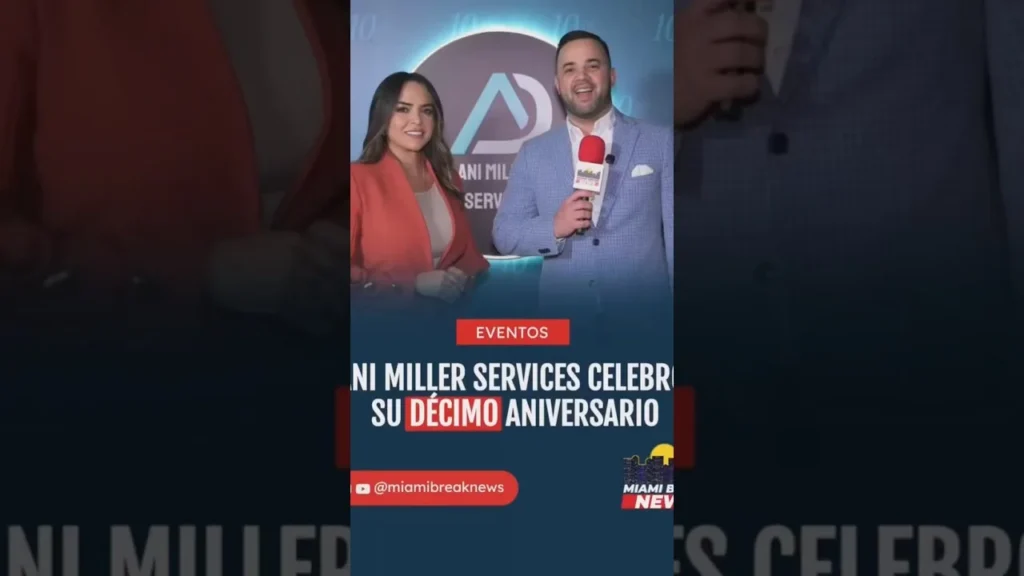
“Focused Discipline”: Ani Miller Services Celebrates 10 Years
Ani Miller celebrated her company's 10 years and her 39th birthday in Miami, and shared the key to her journey.
Read →YOUR NEXT STEP
Before you make an important decision about your money, talk to Ani.
A financial intelligence firm for individuals, families and business owners. In English and Spanish.
Notary Public. I AM NOT AN ATTORNEY LICENSED TO PRACTICE LAW IN THE STATE OF FLORIDA, AND I MAY NOT GIVE LEGAL ADVICE ABOUT IMMIGRATION OR ANY OTHER LEGAL MATTER OR ACCEPT FEES FOR LEGAL ADVICE.
© 2026 Ani Miller Services · Inversiones Los Palapunes Corp.
Ani Miller Services